Design Your Own Gymnastics Leotard: Colours, Fabrics, Ordering


Designing your own gymnastics leotard means choosing the style, colours, fabrics and details to suit training, competition or your club's look. Once you have settled the design route, fabric, size and quote, you can order a one-off piece or a club set with confidence.
How can you design your own gymnastics leotard?
There are two routes: adapt an existing style or have your own design made. The right one depends on whether colours and details are enough for you, or whether you also want to change the cut.
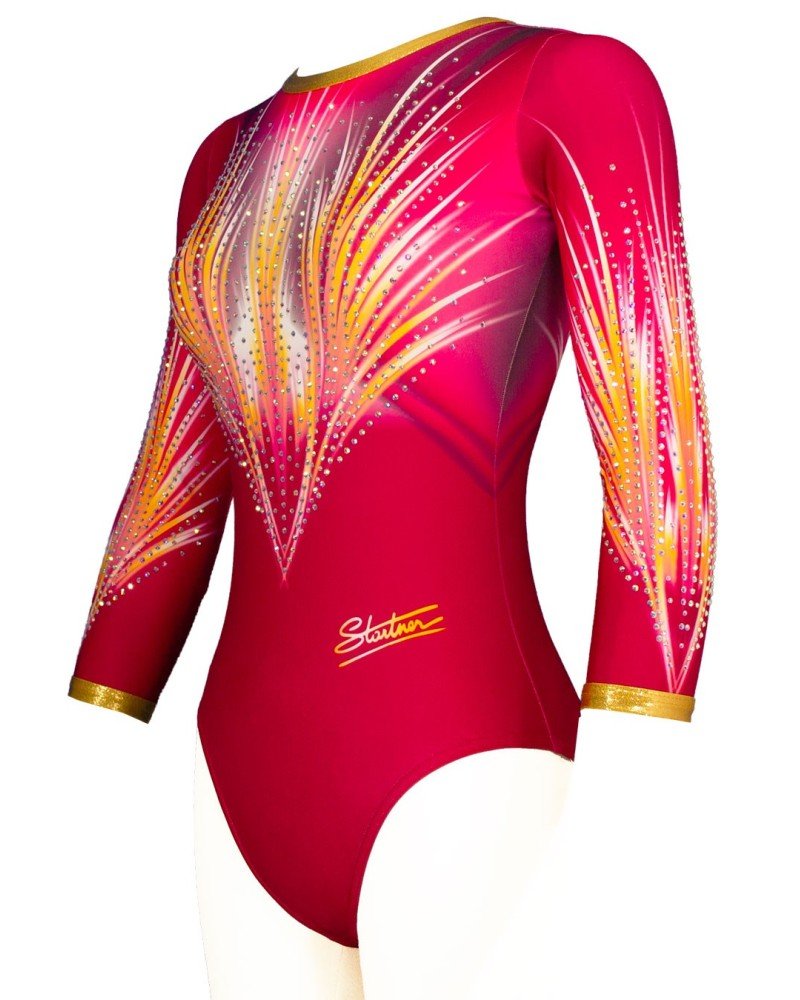
Adapting an existing style
To personalise a leotard, you change the colours and details of an existing style while the cut stays the same. With a configurable style, you first choose the model and colours, then the sleeves and embellishments, and finally the sizes and quantity.
Another ordering process arranges the steps slightly differently: after the style, sleeve length and colours, you can add optional lettering. You then enter the sizes and send an enquiry or order straight away.
Developing your own design
A design of your own goes beyond choosing from set options. You will often need a sketch along with details of fabrics, colours and the changes you want. With a made-to-measure leotard the cut is adapted as well, which is what sets it apart from simple personalisation.
Startner makes customisable club leotards in France and offers made-to-measure styles. They are suitable for both training and competition, so one design can cover both.
Approving the design for production
Before you sign off production, check that every point is clearly defined: style, cut, fabric and lining, colour references, front and back views, and embellishments. An on-screen preview is no substitute for a fabric sample, because colour, feel and sheerness only show on the real material.
Which colours and details are possible?
Once the design route is settled, the visible decisions follow: colours, embellishments and personal lettering. Each of these shapes the look of the leotard and may also change the care and work involved.
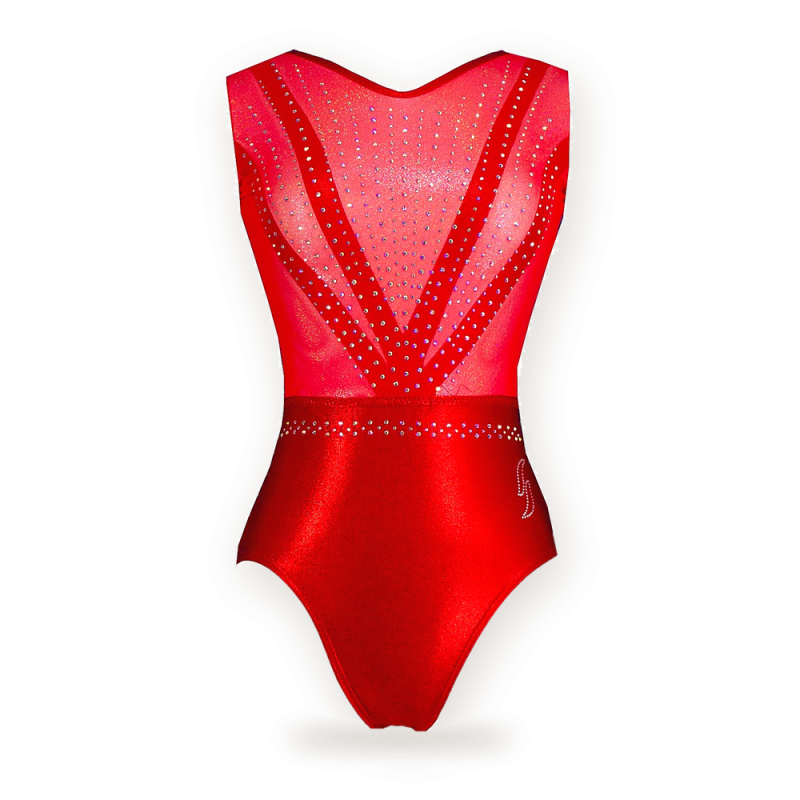
Choosing colours and patterns
You can choose solid panels in club colours, multi-colour combinations, prints and gradients. Which colours and patterns can actually be produced depends on the colour chart and manufacturing technique. Contrasts work well on the sleeves or the back, for example: black with silver, navy with turquoise or burgundy with rose gold.
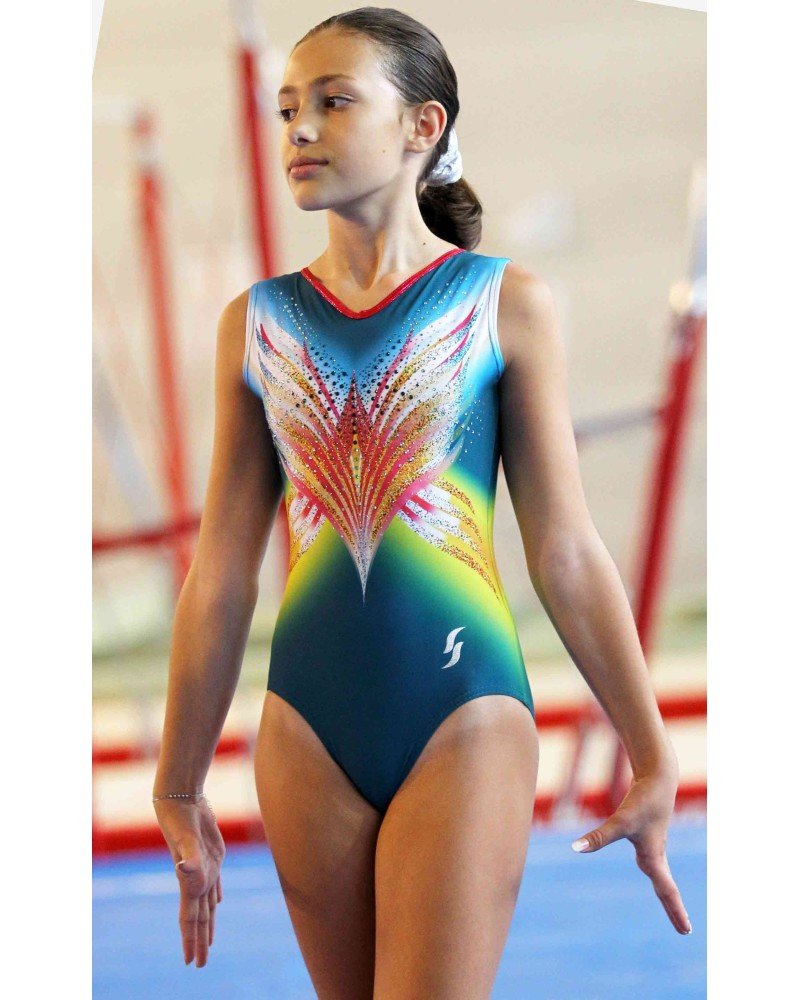
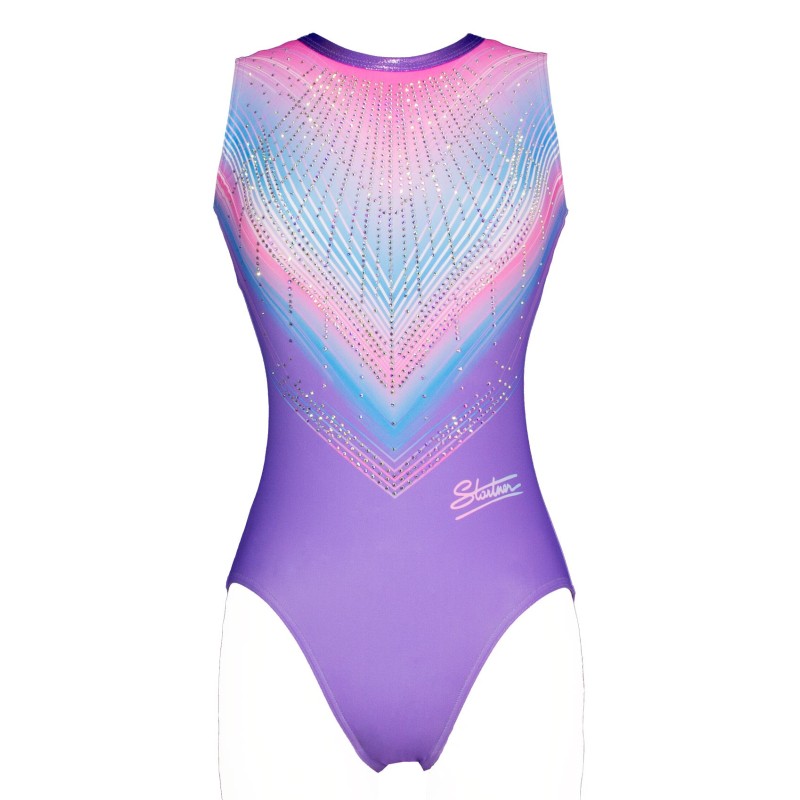
For an example of a gradient, see the Oria-02 sleeveless leotard by Startner: the blue runs from dark to light, combined with a yellow and red central motif. The same style is available as Oria-01 in midnight blue and pink.
Placing embellishments and sparkle
Rhinestones can form a bold or subtle motif, for example on the back or on both sleeves. On the Oria-02 they follow the rays of the central motif. Further accents include lines of rhinestones at the neckline, back or sleeves, and glitter appliqués or ones made from iridescent multi-coloured materials.
These embellishments may make care more demanding. In practice, this means rhinestones, sequins and appliqués do not belong on grip, contact or friction points, where they could get in the way or come loose.
Adding names and a club logo
Personal lettering can show a name, a team name or a motto, applied with stretch transfer film. If you order a leotard with a name, specify the spelling, upper and lower case and placement clearly.
For a club logo, agree the position, a suitable file and permission to use it. For printing, a placement sketch and a vector file are recommended. Startner also offers clubs the Oria-02 in their own club colours.
Which fabrics and cuts work best?
Beyond colour and decoration, the fabric, sleeves and neckline determine comfort, durability and compliance with the rules. This is where you see whether a leotard will stand up to daily training and be allowed in competition.
Choosing fabric by use and opacity
Available materials include matt and shiny polyamide-elastane fabrics, smooth and textured velvet, and wet-look fabrics. Stretch tulle, a sheer mesh, can be combined with shiny polyamide. A microfibre lining can sit underneath, either throughout or just in certain areas.
For training wear that is worn often, different criteria count than for decoration. A fibre label alone proves neither breathability nor durability, so check the following points:
- Stretch: the fabric must follow every movement.
- Recovery: the material returns to its shape after stretching.
- Strong seams: they withstand the strain of training over time.
- Care: the care instructions suit frequent washing.
Also test light and nude-coloured panels for opacity when stretched, in motion and under bright light. As an example of composition, the Oria-02 is made of 80% polyester and 20% elastane. You will find more simple styles in our range of training leotards.
Which sleeves suit a gymnastics leotard?
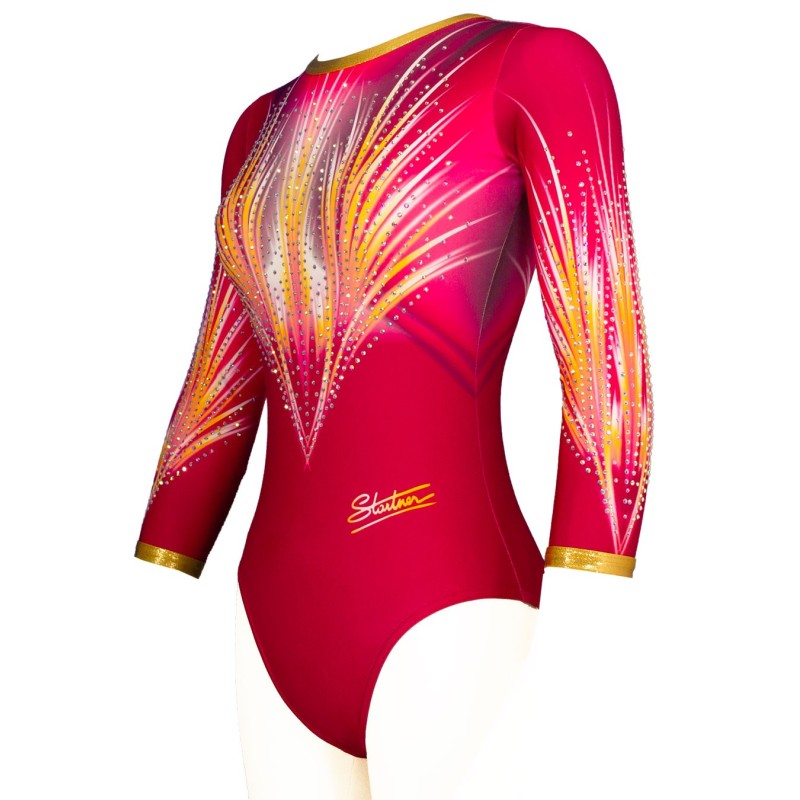
Depending on the style, sleeveless versions as well as short, three-quarter, seven-eighths and long sleeves are possible. The sleeve length should suit the movement and intended use. A long-sleeved leotard keeps the arms warm in cool gyms, while a sleeveless leotard, according to Startner, gives more freedom at the shoulders. Three-quarter sleeves leave the wrists free.
Startner offers leotards with long or three-quarter sleeves in opaque fabric, mesh or sheer voile, many of them with rhinestones. Classic necklines are round, V and boat necks; high-necked versions may need a fastening. Alongside short-leg styles there is also the full-length unitard.
Checking competition rules in advance
A competition leotard must meet the rules of the discipline in question. Before signing off, check the rules of your discipline and the specific competition information.
How do I find the right size?
A great design is of little use if the leotard does not fit. The size comes from accurate body measurements and a fitting while moving.
Comparing measurements with the size chart
Measure with a snug tape measure and compare the figures with the size chart of the chosen maker and style, not just with your usual clothing size. These measurements are key:
- Chest, waist, hips: the basic measurements for choosing any size.
- Torso girth: from the front of the shoulder down through the crotch and up the back to the shoulder.
- Arm length: also needed for a full-body unitard.
- Inside leg: also to be measured for full-body unitards.
A good chest measurement does not make up for a torso that is too short, and too much fabric slips when moving. Startner offers girls' leotards in sizes for ages 4 to 14 and women's styles in EU sizes 36 to 46.
Checking the fit in motion
The leotard fits closely without pulling at the shoulders or crotch; the sleeves do not wrinkle or dig in at the wrists. Test the fit with a squat, raised arms and a typical training movement. The neckline and leg openings should not shift.
Plain fitting leotards or a size set let you check before an individual or club order. Before a full run, a prototype can also test the design. For club orders, all gymnasts try on the same version of the style and confirm their size.
Tip
The right size for your leotard
Measure chest, waist, hips and torso girth with a snug tape measure and compare the figures with the size chart of the chosen style, not just your usual clothing size.
How do I compare quotes and order safely?
Once the design and sizes are fixed, it comes down to price, organisation and timing. Comparing quotes in full and approving them in writing avoids surprises over cost and delivery.
Compare the total price, not the starting price
There is no single price for a custom leotard: an adapted one-off, a made-to-measure piece and a club set are different jobs. The total price depends on fabric and usage, cut, sleeves, printing, logo, names, lining, rhinestones, quantity and shipping, among other things.
If you want to design leotards on a budget, choose an existing cut with few changes. Startner lists the Oria-02 at €59.00; however, a style price like this is not a direct benchmark for a fully personalised competition leotard.
| Type of order | What changes | Effect on price |
| Adapted style | Colours and details, cut unchanged | Less work |
| Made to measure | Cut, fabrics, own design | More work |
| Club set | Matching design, quantity, logo | Depends on quantity and details |
Preparing a club order properly
For a group order of club leotards, each person's size and the total quantity must be fixed. Agree three roles in advance:
- Coordinator: collects sizes and requests.
- Coaching team or club: approves the shared design.
- Admin: decides who orders, pays, hands out the leotards and raises any complaints with the seller.
For future orders, clubs should keep a design file with the style, cut, colour and fabric codes, logo file and the sizes last ordered. An identical repeat order depends on whether these components are still available.
Securing approval and delivery
Written approval covers sizes, exact names and logos, quantity, delivery address, delivery date and full costs. Keep the design, quote and approval so you can check the delivery against them.
Design, corrections, fitting, approval, production and shipping are separate stages. So give a fixed competition date before placing the order, and have the delivery date for your specific order confirmed in writing.
For goods genuinely made to the customer's specifications or clearly personalised, the right of withdrawal may not apply. Simply choosing standard options does not automatically exclude it, and your rights regarding faulty goods remain in any case.

Design your leotard directly with the maker
Since 1968 we have been making gymnastics wear in Marseille, as one-off pieces or club sets, in your colours and with your logo.
Frequently asked questions
The price depends on the work involved, which is also affected by the neckline shape, lining and any extra design elements. Look at the base style and extras such as special fabrics, embellishment, names, patterns, shipping and express production separately.
Startner makes the Oria-02 in club colours on request via the club area or by email. For a logo, agree the position, file and permission to use it, ideally with a placement sketch and a vector file. It is best to agree on repeat-order availability and a delivery date confirmed in writing beforehand.
A wrong name, a different size or faulty printing can count as a defect, whereas a fit you do not like on a correctly made chosen size does not. Record any differences with photos and the order summary, and report them.
Share this article:





Similar posts
Gymnastics leotard size chart: EU to US and UK conversion
Convert European gymnastics leotard sizes to US and UK sizes, with a chart in inches and tips to measure your gymnast and choose between two sizes.
Long Sleeve vs Sleeveless Gymnastics Leotards: Which to Choose?
Sleeveless for training, long or mesh sleeves for competition: the pros and cons of each gymnastics leotard style, with a quick comparison table.