What Do Gymnasts Wear Under Their Gymnastics Leotard?


What gymnasts wear under their gymnastics leotard affects comfort and often whether their kit meets the rules. Below we look at knickers, sports bras and pads, then at what to wear for training. After that come the competition rules and a fitting test that lets you check fit and opacity yourself before you compete.
What do gymnasts wear under their leotard?
There is no single answer: the choice depends on the body, the support needed and the cut of the leotard. What matters is that underwear stays in place during gymnastics and does not dig in.
Knickers or no underwear?
Under the leotard, a gymnast can wear well-fitting knickers or short, close-fitting briefs. Some train without knickers altogether. There is no general rule either way. If you wear knickers, check three things:
- As few seams as possible: knickers with few seams show less under the fabric.
- Flat edges: even a flat edge can stay visible under stretched fabric – “seamless” does not automatically mean “invisible”.
- Secure fit: when stretching, doing splits and landing, the knickers stay under the leg line without slipping or cutting in.
Sports bras, crop tops and pads
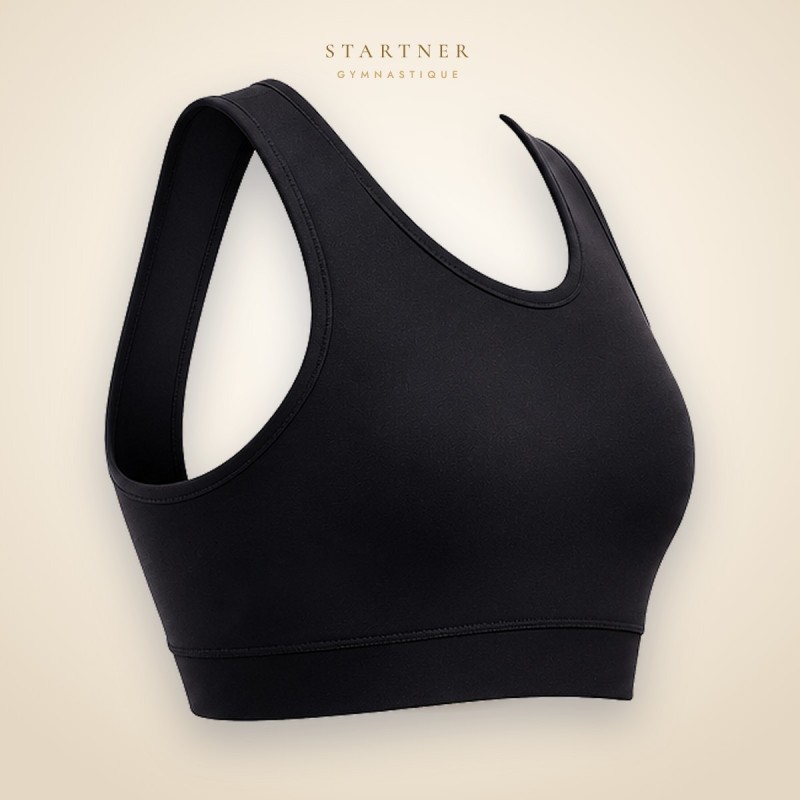
What applies to knickers applies to the upper body too: there is no general requirement to wear a bra. If needed, a sports bra, a crop top or a close-fitting sports top all work. A sports bra should give support without cutting in when hanging, moving overhead or breathing. The difference lies in the straps and fastenings: they must neither press nor slip.
Removable bra pads can add comfort and coverage. Check beforehand that the pads stay in place during jumps and turns and do not show through the fabric.
What feels comfortable for girls?
For younger girls, a soft vest or crop top can feel comfortable. Whether a gymnast wants a bra depends on her body, the support she needs and the cut of the leotard. Age or competition category alone does not tell you.
With children, personal needs come first: they should not be pushed into wearing any particular underwear.
What is comfortable and practical for training?
Training has fewer fixed rules than competition. What counts is freedom of movement and clothing that stays in place during every exercise.
Close-fitting clothing for gymnastics
A leotard is not always compulsory for club training. Each club decides what a training group should wear. Suitable options are a close-fitting leotard, or a fitted sports top or T-shirt with short, tight sports shorts, cycling shorts or stretchy leggings.
For rolls, flips and other acrobatic elements, clothing should allow freedom of movement and stay in place. Loose cords, hoods and zips can catch on the apparatus. In practice, tracksuit bottoms or a sweatshirt are for warming up and come off before apparatus work.
Leotard and shorts for training
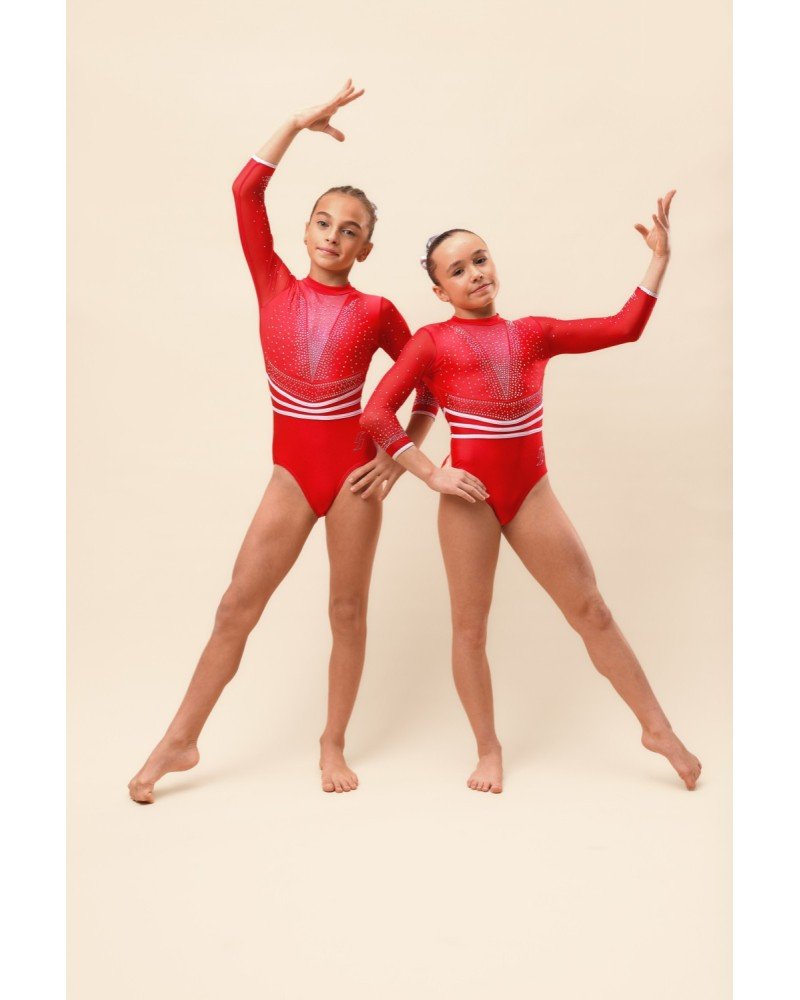
Most Startner leotards are made of Lycra, a stretchy fabric that follows every movement and then returns to its shape. Startner also makes leotards that are equally suited to training and competition. Whether for girls or women: by Startner’s standards, the gymnastics leotards for girls and women fit close to the body without constricting and allow complete freedom of movement.
Anyone who wants more coverage in training can wear close-fitting shorts or leggings with the leotard. For this, Startner offers high-waisted black training shorts with lettering on the leg, which pair well with a leotard.
What is allowed in competition?
What is comfortable in training is not automatically allowed in competition. The rules of the discipline and of the specific competition apply.
Different rules for each discipline
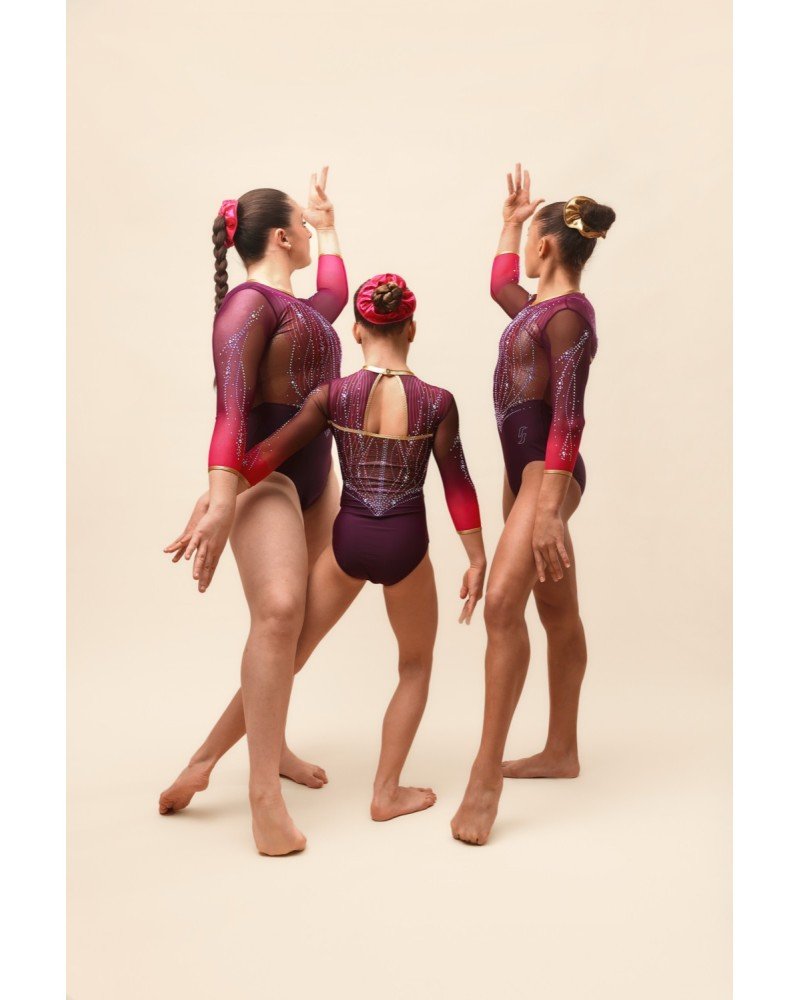
In competitive women’s artistic gymnastics, the international Code of Points 2025–2028 requires an opaque leotard or a full-length unitard, with full leg coverage in a matching colour.
How can you check fit and opacity?
You only see whether clothing fits once you start moving. A short fitting session with the complete outfit reveals problems that stay hidden when standing still, both for training and before a competition.
Move in the complete outfit
Try on the leotard with the underwear you actually plan to wear, because only the combination reveals rubbing, slipping and anything poking out. The test should include a deep squat, a straddle, a handstand or another upside-down position, several landings and arm and shoulder movements. By Startner’s standards, the straps stay on the shoulders, the back does not wrinkle and the leg line does not ride up during jumps.
Check opacity and visible edges
Fabric that looks opaque when standing can become see-through when stretched. So check it while moving and under sports hall lighting, from the front, back and side, at these points:
- Leg line: no knicker edge peeks out and the leg line stays in place.
- Back: the fabric stays opaque even when stretched.
- Bra straps: they stay hidden under the leotard straps.
- Pads: if worn, they do not move or show through.
Final questions before a competition
First check the discipline and the specific competition rules.
If underwear pokes out during the test, the leotard becomes see-through when stretched or the pads look like extra padding, there is still time to act. The exact outfit can then be confirmed before the competition using the competition rules or with the organisers.

Opaque leotards direct from the manufacturer
Since 1968 we have been making gymnastics leotards in Marseille for training and competition, for clubs and individuals. Discover them now.
Frequently asked questions
For training, a close-fitting leotard or a fitted top with short sports shorts, cycling shorts or stretchy leggings works well. For competitions, the rules of the discipline and of the specific competition apply.
Share this article: