Women's Gymnastics Leotards: Training and Competition Guide


A women’s gymnastics leotard has to fit close to the body, move with you and, depending on its use, meet certain rules. The right choice depends on discipline, measurements, sleeves, leg style and fabric. For club orders, competition requirements and the size of every single gymnast come into play as well.
Which leotard suits training or competition?
In shops, the same models are sometimes sold as gymnastics leotards and sometimes as gym leotards. The name matters little: the cut and the discipline decide whether a model is right for you. That is why it pays to look at how it will be used before thinking about colour or design.
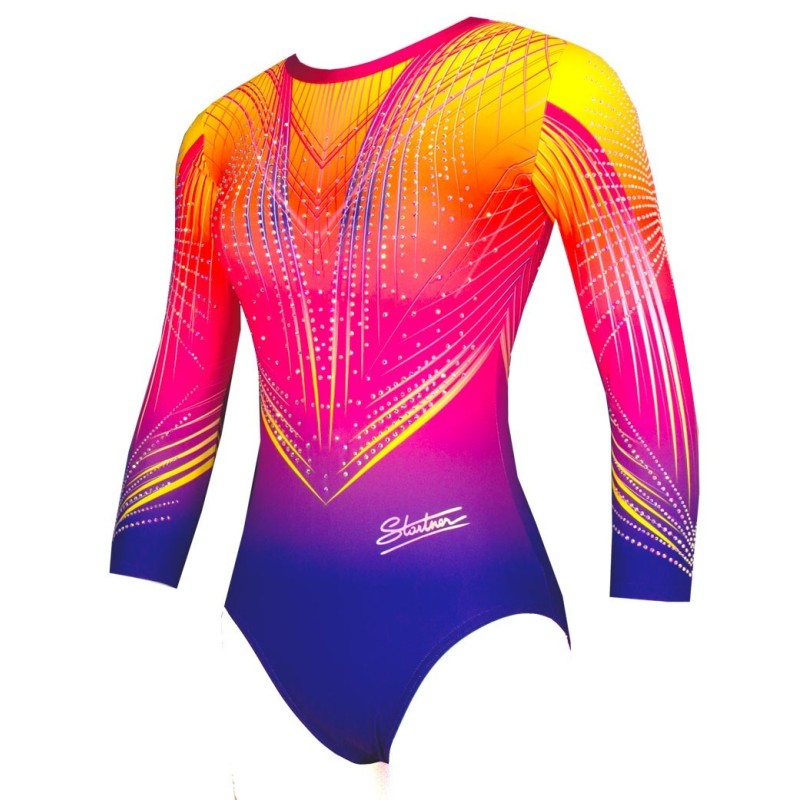
Leotards for regular training
In training, what counts is how the leotard performs week after week. It doesn’t need elaborate embellishment, but it does need a few clear qualities:
- Simple cut: nothing superfluous, nothing that gets in the way during rolls or support positions.
- Breathable fabric: comfortable even in long sessions.
- Stretch: the fabric follows splits, bridges and jumps.
- Few seams: fewer places that can rub or give way.
Startner offers models for everyday use in the gym, made in France and available in a range of colours. Startner describes the collection as comfortable and elegant: a claim you can check for yourself in the range of gymnastics leotards for training.
Rules in women’s artistic gymnastics
If you compete, you need more than a comfortable leotard. In Germany, the DTB guidelines for recreational women’s artistic gymnastics apply from 1 January to 31 December 2026; where a specific competition’s rules differ, those take precedence. They require a proper, opaque gymnastics leotard whose neckline is limited at the front and back by defined lines.
The difference shows on sleeveless models: under the 2026 DTB guidelines, straps must be at least 4 cm wide. In 2025 the minimum width was still 2 cm, so an older competition leotard may no longer be permitted today.
Rules in rhythmic gymnastics
Rhythmic gymnastics has its own rules. The FIG Code of Points 2025–2028 requires a close-fitting leotard so that judges can see body positions. The chest and crotch must be covered opaquely in line with the rules.
Decorations must be safe and lie flat; shine or rhinestones alone do not make a leotard compliant. Competition attire is checked, and non-compliant clothing can lead to a deduction under the FIG Code of Points.
How do you find the right size and fit?
Fit decides whether a leotard goes unnoticed in competition or has to be constantly adjusted. It comes down to a few carefully taken measurements and trying it on in motion.
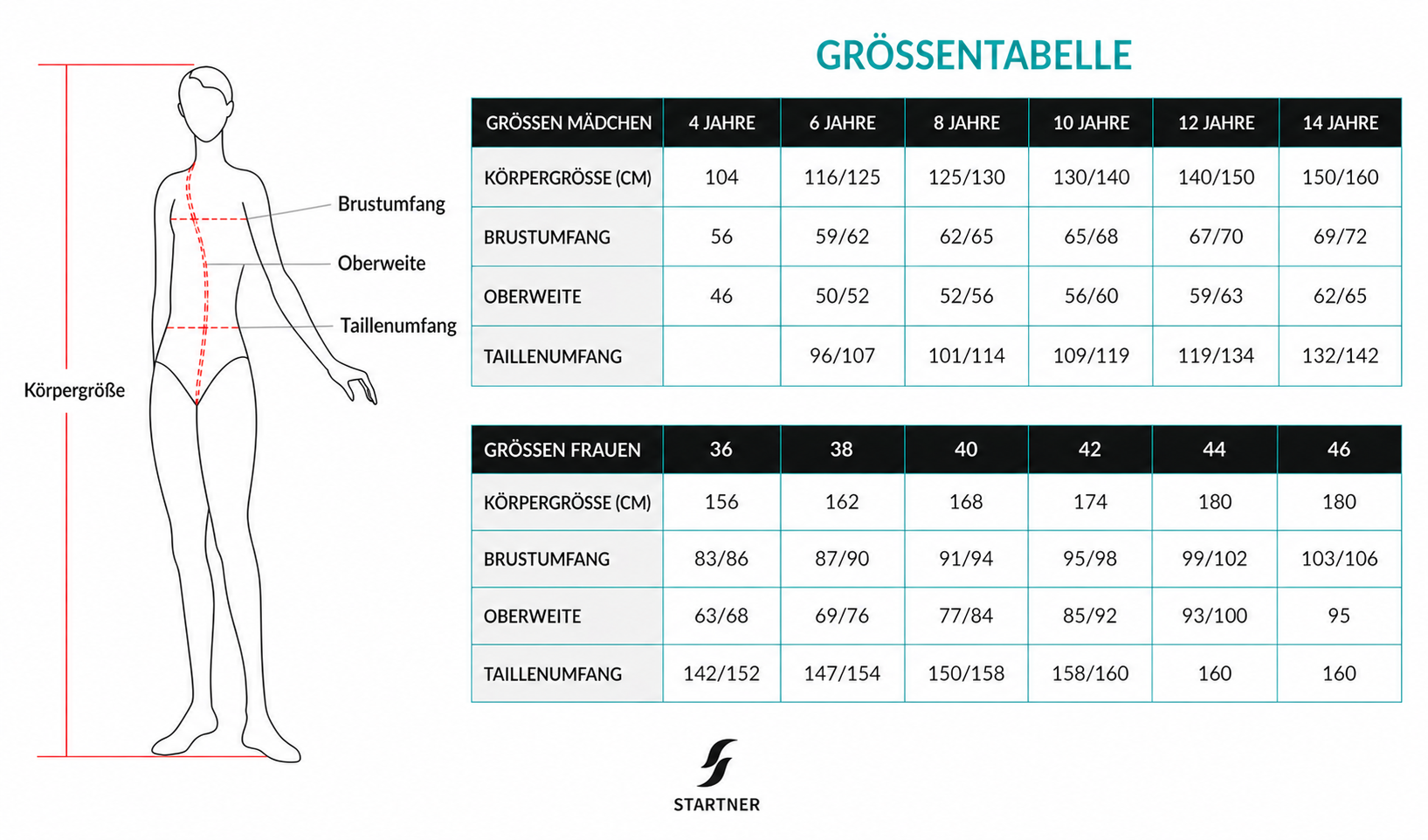
Taking body measurements correctly
Measure height standing up straight, ideally without shoes, from the top of the head to the sole of the foot. For the chest, place the tape measure horizontally around the fullest part without pulling it tight. Measure the waist at its natural narrowest point without pulling the stomach in, and the hips horizontally around the fullest part of the bottom and hips. For the torso (girth) measurement, run the tape from the highest point of the shoulder down the front of the body, through the crotch and back up over the back.
Checking measurements against the size chart
Age or your usual clothing size is not a reliable guide to the size of a one-piece leotard. What matters is the chart for the specific model, because every cut comes up differently.
The torso in particular often decides how a leotard fits. Here is how to spot the typical issues:
- Torso too short: the leotard pulls at the crotch or shoulders, even though chest and hips fit.
- Torso too long: the fabric wrinkles or shifts.
- Measurements between two sizes: the cut of the model tips the balance.
In practice, this means: if your measurements point to different sizes, check which measurements the model’s chart prioritises. Also find out whether the cut tends to come up short, long, snug or roomy.
Checking the fit in motion
A gymnastics leotard fits close to the body without restricting breathing, circulation, joints or comfort. Only movement shows whether it does. A proper try-on includes:
- Upper body: raising the arms, forward and backward bends.
- Legs: deep squat and lunge.
- Discipline: splits and typical gymnastics movements, as far as trained.
Watch out for warning signs: painful pulling at the crotch seam or straps, leg openings that dig in, strained seams, slipping, or see-through fabric when stretching. If any of these occur, the size or the cut is wrong.
Tip
Measure first, then test in motion
Compare chest, waist and hips with the size chart, then check the fit in motion: the leotard should sit close to the body without needing constant adjustment.
Which cut suits your needs?
Once the size is settled, the cut remains to be chosen. Sleeves, leg style and openings change how the leotard feels to wear and whether it meets the rules of your discipline.
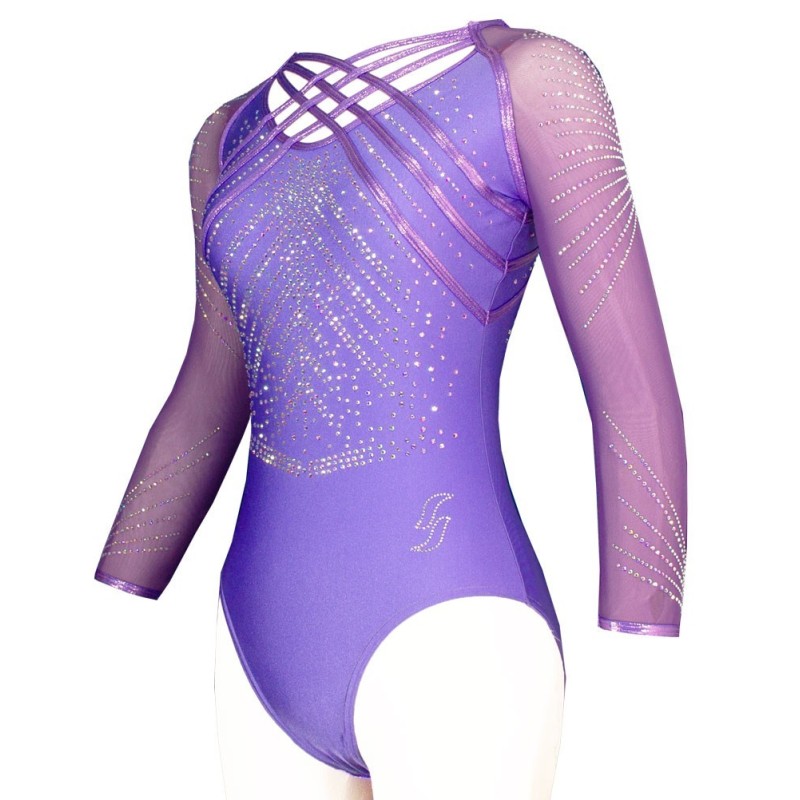
Sleeveless, short-sleeved or long-sleeved
A sleeveless leotard leaves the shoulders free. It is the one to choose if you train intensively or in warm gyms. The straps must neither dig in nor slip off.
With a short-sleeved model, what matters is the fit at the armpits and freedom of movement when raising the arms.
A long-sleeved women’s gymnastics leotard covers more of the arms and shoulders. When trying it on, check that the sleeve length is right and that overhead movements stay free: this applies to every long-sleeved cut in the collection of gymnastics leotards made in France.
Leg line and leotards with legs
A women’s gymnastics leotard with legs can have short, mid-length or full-length legs. With a full-body unitard, the leg length therefore has to suit you as well as the torso.
In DTB recreational gymnastics in 2026, a one-piece leotard with legs down to the ankles is allowed for. Tight-fitting shorts or leggings of any length are permitted over or under the leotard.
Rhythmic gymnastics is stricter: the FIG rules 2025–2028 allow one-piece long leotards and certain combinations with full-length tights. Shorts or mid-length tights are not allowed there.
Openings and design
For adults, a round neckline, open back or racer back are all options. The neckline must stay securely in place even during backbends.
The leg line is just as important: in splits and leg lifts it must neither dig in nor gape so far that underwear becomes visible. Armholes must not restrict movement or slip.
Geometric patterns, gradients, glitter and rhinestones define the look. They change nothing about checking coverage and freedom of movement.
Recommended products
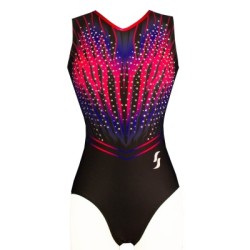
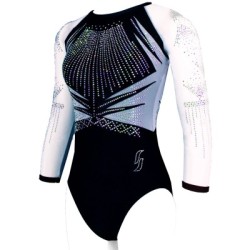
How do you make a leotard last?
How long a leotard lasts depends on fibre, workmanship and care. If you check these three points when buying, you are also comparing prices on a sound basis.
Fibres and fabric properties
LYCRA® is a registered trademark for elastane fibres, not a generic term for any fabric blend. Startner makes its leotards from technical Lycra fabrics. With other materials, it is worth looking at the blend:
- Polyamide-elastane: check stretch and recovery after stretching.
- Polyester-elastane: check shape retention and opacity on the specific fabric.
- Care properties: for polyester-elastane, these depend on the fabric in question.
- Labelling: fibre composition stated on the label and the product page.
In Germany this information is mandatory: under § 4 of the German Textile Labelling Act, the fibre composition must in principle also be given in German for textiles sold online.
Comparing workmanship and price
Velvet describes a fabric surface, not a fibre. Velvet, glitter coatings and stretch mesh are sensitive to abrasion, snagging and unsuitable washing. The difference shows in the seams: flat, elastic seams stretch with the fabric, while rhinestones and other appliqués sit firmly and flat, with no sharp edges or loose parts.
Fabric blend, cut, embellishments such as sequins and made-to-order production can increase the manufacturing effort. A higher price or a heavier fabric weight does not on its own prove longer durability; compare the functionality and workmanship of the sportswear directly.
Care, repair or replace
The care label of the specific leotard takes priority. For some embellished models, the guidance is: hand wash or machine wash in a laundry bag at 30 °C maximum, no tumble dryer and no iron. Take a damp leotard out of your kit bag after training; air drying is kind to elastic fibres and bonded details, unless the label says otherwise.
Loose seams or appliqués should be repaired early. If the fabric has permanently lost its stretch, seams come apart, the leotard slips, areas become see-through or appliqués no longer hold securely, it is time to replace it.
How does a club order the right leotards?
Club orders bring two requirements together: a shared look and a good fit for every single gymnast. Both can be planned.
Defining the design and competition requirements
Startner designs and makes customisable gymnastics leotards in France for clubs, training and competition in artistic and rhythmic gymnastics. Before you send an enquiry, decide on:
- Cut and sleeves: to suit the discipline and the competition rules.
- Fabrics, colours and embellishments: including the club logo.
- Size requirements: number and sizes of leotards needed.
This lets you compare options for personalised gymnastics leotards for clubs on the same basis. In DTB recreational gymnastics 2026, team competitions require matching outfits for the march-in and the award ceremony; in FIG group routines 2025–2028, material, style, design and colour must be identical.
Checking and approving sizes individually
A shared design does not mean a shared size. Measure each gymnast individually, following the method described above. A central measurement list records for each person:
- Model and variant: for example sleeve or leg style.
- Size: the size chosen from the model’s chart.
- Body measurements: the values actually measured.
- Approval status: whether the size has been confirmed.
Sample sizes help you try on cuts before approval. For children, parents or guardians should be involved in the fitting and size approval.
Checking the order and delivery
For made-to-measure or heavily embellished club leotards, possible changes and the consequences of incorrect size information should be agreed in writing beforehand. Return options may be limited for custom-made goods; check the exact terms before ordering.
On delivery, check size, workmanship, colour, material and the agreed design. Before the competition, do a test run with the actual movements of the routine.

Women’s gymnastics leotards direct from the maker
Since 1968, we have been making gymnastics leotards in Marseille from technical Lycra fabrics, for training, competition and clubs. Discover them now.
Frequently asked questions
No. Items labelled “women’s” can also be children’s or teen models. So check the available sizes and the size chart for the specific item.
Glitter-coated fabrics can suffer from friction, sweat, deodorant or chemical substances. Like velvet or stretch mesh, they are also sensitive to abrasion, snagging and unsuitable washing.
Mesh and sheer inserts must comply with the competition rules in force; in women’s artistic gymnastics, non-transparent material is required. Transitions should be stretchy, neatly finished, flat and provide enough coverage, as mesh can catch on seams or jewellery.
Share this article: