Why are gymnasts short? Growth, build and the facts


In elite gymnastics, small builds are common, but there is no evidence that training stopped these athletes from growing. To understand why gymnasts are short, you need to separate three mechanisms: selection, biomechanics and pubertal maturation.
Why are elite gymnasts often short?
In reality, the short stature seen on the podium is mainly the result of selection. A sport that rewards certain physical attributes ends up bringing together the athletes who already have them. Height can then come from that selection, without training having changed growth.
Selection favours certain builds
In artistic gymnastics, light, short athletes can have an advantage on some apparatus. They may then be more likely to be selected from one stage to the next, without their growth having been reduced. A 2017 systematic review included 17 studies out of 407 references on the subject.
- A small, light build : the 2017 review describes it as common among elite female artistic gymnasts.
- Later bone maturation : these athletes' skeletons reach their development stages later than average.
- Family inheritance : the authors consider the selection of inherited physical traits likely, without making body type a sufficient predictor of performance.
No average height applies to all gymnasts: it varies with age, sex, discipline and maturity. A study of 255 elite rhythmic gymnasts aged 11 to 23 even placed them, on average, above the median height for their age. The cliché of the short gymnast, drawn from artistic gymnastics, therefore does not automatically apply to other disciplines.
How build affects movement
In practice, the difference comes down to the strength-to-mass ratio: when it is favourable, it can help a gymnast move her own body during certain take-offs or rotations. Mass kept close to the axis of rotation can also favour certain movements, by making it easier to speed up or slow down a rotation. A study published in 2003 followed 37 gymnasts, aged 10 to 12 at the start, for 3.3 years: a high strength-to-mass ratio remained an advantage for certain rotations.
The same study shows that growth does not affect all elements in the same way. Longer limbs and torso change the mechanical levers, but a larger build can also bring reach and power in some situations. Technique, coordination and landing quality also count in performance.
Maturation and discipline blur comparisons
Two gymnasts of the same age can be different heights because they are at different stages of puberty. Among 150 female gymnasts aged 14 to 17.9 studied at the World Championships in Rotterdam, those who had not yet had their first period were shorter overall. A 2004 study of 262 artistic gymnasts aged 13 to 23, 169 girls and 93 boys, found a more marked delay in bone age among the girls.
This delay reached 2 years in girls, compared with 1 year in boys, without the study establishing that training was the cause. A comparison published in 2025 likewise found artistic gymnasts shorter than the rhythmic and acrobatic gymnasts studied. The key point: a height gap between disciplines does not tell you whether it comes from selection, maturation, diet or training.
Does gymnastics stunt children's growth?
The question comes up every time a child joins a competitive squad, especially when a young girl moves to intensive training. Recent studies show no general effect of training on adult height. They do, however, describe specific situations in which development can suffer, and that is where vigilance is needed.
What studies show about adult height
A 2013 scientific review found no evidence that intensive artistic gymnastics training reduces adult or near-adult height. Nor did it find slower growth of the legs or torso. Saying that gymnastics makes you short therefore does not match the available data. A 2019 review confirms that there is no general adverse effect of exercise on the linear growth of the children and adolescents studied.
A review published in 2001 adds a nuance: in some elite gymnasts, growth slowed during the years of training, then picked up again after competition was reduced or stopped. Its authors could not separate the effect of training from other factors. So to the question of whether sport slows growth, the most accurate answer is: sometimes, temporarily, in some athletes, with no proven loss in adulthood.
Situations in which development can suffer
A 2003 French review described slowed growth and delayed puberty in international female gymnasts who trained intensively, often from early childhood. It placed these effects in very rare situations of excessive, poorly managed training loads. What makes the difference here is load management.
The other situation to be aware of concerns energy physiology. The 2023 International Olympic Committee consensus defines relative energy deficiency in sport as an impairment of physiological or psychological functioning. It is caused by low energy availability, when this is problematic and prolonged or severe.
A young gymnast's food intake must cover growth, exercise and recovery all at once. A prolonged shortfall can disrupt hormones, weaken bones and increase the risk of injury, in girls and boys alike. Worth knowing: this deficiency sometimes sets in without any intention to lose weight, simply because needs increase during adolescence.
Training intensity and bone health
Some very high-level programmes reach 20 hours of training per week. This volume is neither the norm for all gymnasts nor, on its own, proof of an effect on adult height. In practice, the decision depends as much on rest, diet, session content and previous injuries as on the number of hours.
On bone development, a 2018 systematic review of 24 studies reported higher bone mineral density and content in gymnasts than in non-athletes, highlighting the role of diet and hormonal status. A 2025 comparative study, however, found lower tibial bone strength in artistic gymnasts than in rhythmic and acrobatic gymnasts. Its authors recommended individual monitoring of injury risk.
When to worry and how to monitor growth?
A gymnast's short stature does not, on its own, reveal its cause: heredity, late puberty or a genuine slowdown. Only monitoring over time can tell them apart.
Look at the growth trajectory
A single measurement allows no conclusion. Monitoring a child's growth alongside gymnastics involves several steps, in this order:
- Gather dated measurements : write down all known heights and weights, with their dates.
- Have height checked : without shoes and with suitable equipment, as a measuring error can look like a slowdown.
- Plot them on growth charts : use the charts in the child's health record and look at the trend, family background and pubertal development rather than a single percentile.
- See a doctor if the curve drops : bring the training schedule and information on diet, fatigue and injuries.
Depending on this initial assessment, the family doctor or paediatrician may order tests or refer to a specialist. These tests are not routine for all gymnasts: a stable short stature, consistent with the parents' height, does not usually call for them.
Spot the signs that need medical advice
According to the French national health insurance (Assurance Maladie), several pubertal maturation thresholds warrant an assessment. These are prompts to consult, not diagnoses:
- Late puberty in a girl : no breast development by age 13 or no first period by age 15.
- Late puberty in a boy : no testicular development by age 14.
- Early puberty : signs of puberty before age 8 in a girl or before age 9 in a boy, or a growth rate above 9 cm per year.
Other signs should be assessed in the context of training: persistent fatigue, difficulty recovering, unintentional weight loss, repeated injuries, late or irregular periods, restricted eating. Persistent localised bone pain or pain on impact also warrants medical advice. Chest pain, fainting during exercise or severe malaise require urgent care.
Adapting the outfit to a changing body
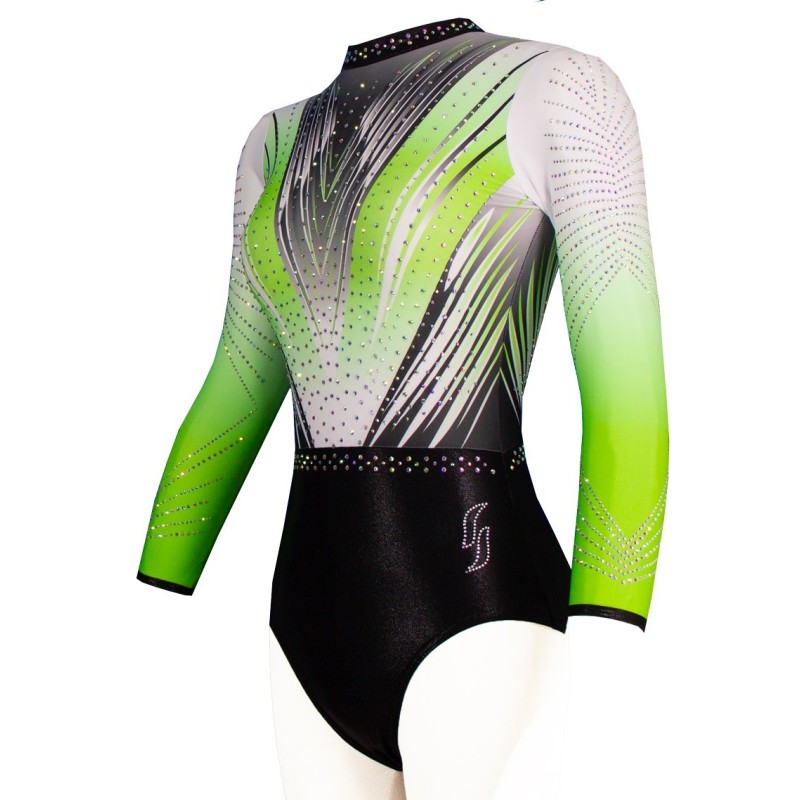
Leotard size is a matter of comfort, never a diagnosis of growth. For our whole gymnastics leotard collection, Startner recommends checking standing height, then chest, waist and hip measurements.
The torso measurement of a one-piece outfit is taken from the top of the shoulder, through the crotch and up the back. In practice, a lengthening torso may call for a different size among our individual gymnastics leotards, even when the child's height has barely changed.
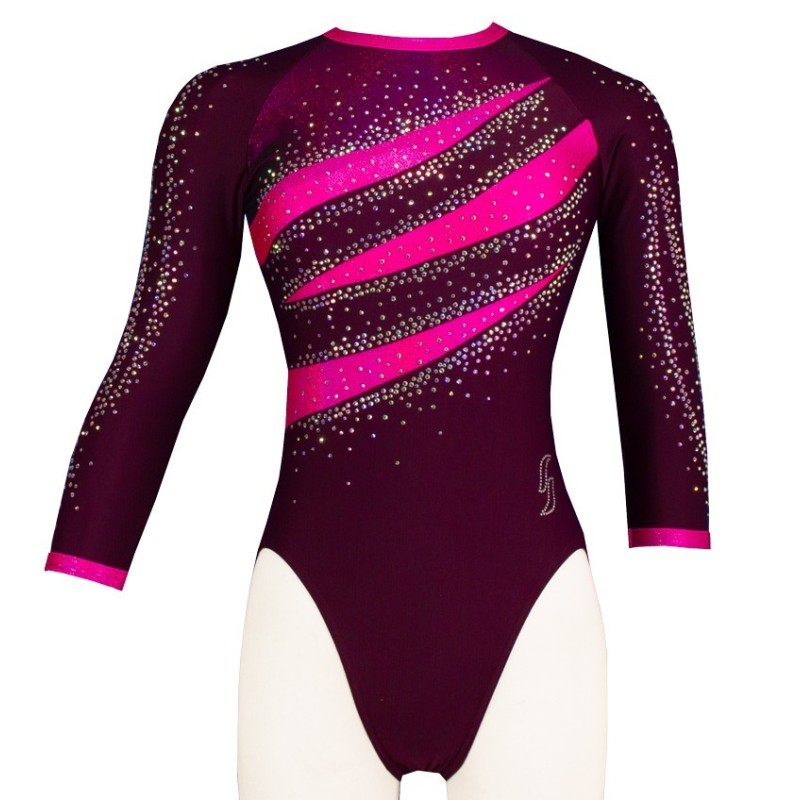
Startner also offers customisable gymnastics leotards, with a choice of rhinestones or an added first name. Customisation does not replace checking current measurements before ordering: a garment that is too tight restricts movement.
Frequently asked questions
No: there is no tangible scientific evidence that more developed muscles pull on bones to the point of blocking their growth. The lack of a systematic effect on adult height does not, however, rule out growth, puberty or health problems in some athletes.
No, being short is neither a requirement for starting nor a medical or coaching goal: exercises are adapted to age, ability, experience and health. Progressive and supervised, recreational gymnastics can contribute to coordination, strength, balance and bone health. Nor can height be used to judge a child's potential to progress.
We advise against it: a much larger size creates folds and reduces support, and the stretch of the fabric does not make up for an unsuitable torso length. Conversely, a leotard that is too tight should never be used to compress the chest, pelvis or stomach. The best approach is to retake measurements regularly, especially before an important competition.
Share this article: