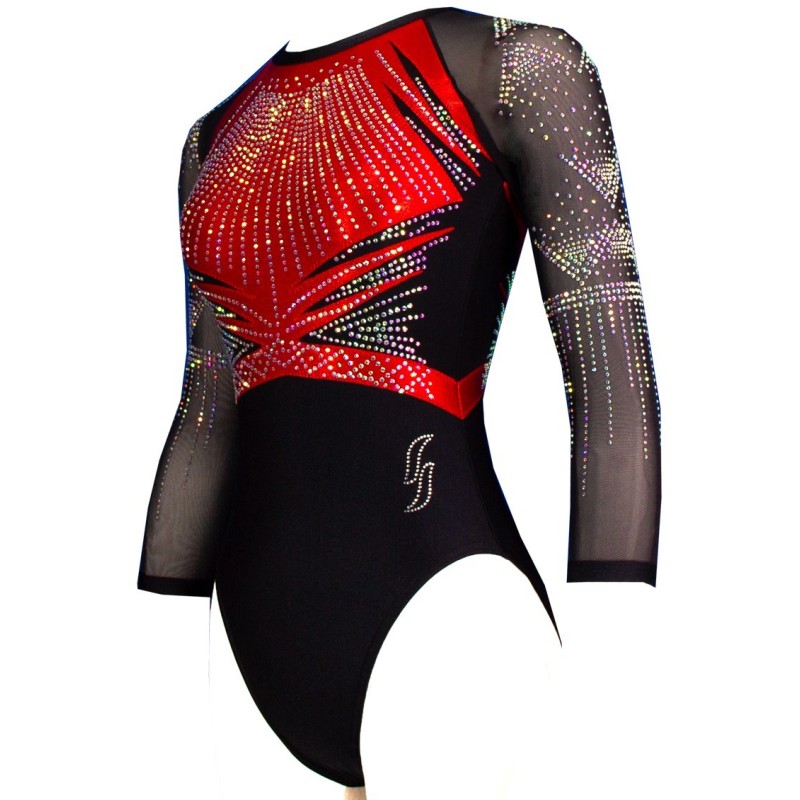
How to Wash a Gymnastics Leotard: Lycra, Colours and Rhinestones


To make the fabric, colours and embellishments last, it is best to wash a gymnastics leotard according to its care label. Here you will learn how to read the care symbols and choose between hand washing and the machine. We then cover temperature and detergent, protecting rhinestones and prints, and drying it properly.
What does the leotard's care label tell you?
The label inside the leotard is the definitive care guide for that specific garment. It sets out how warm, how vigorously and with which products you may wash it. It also covers bleaching, drying and ironing.
Why the label matters
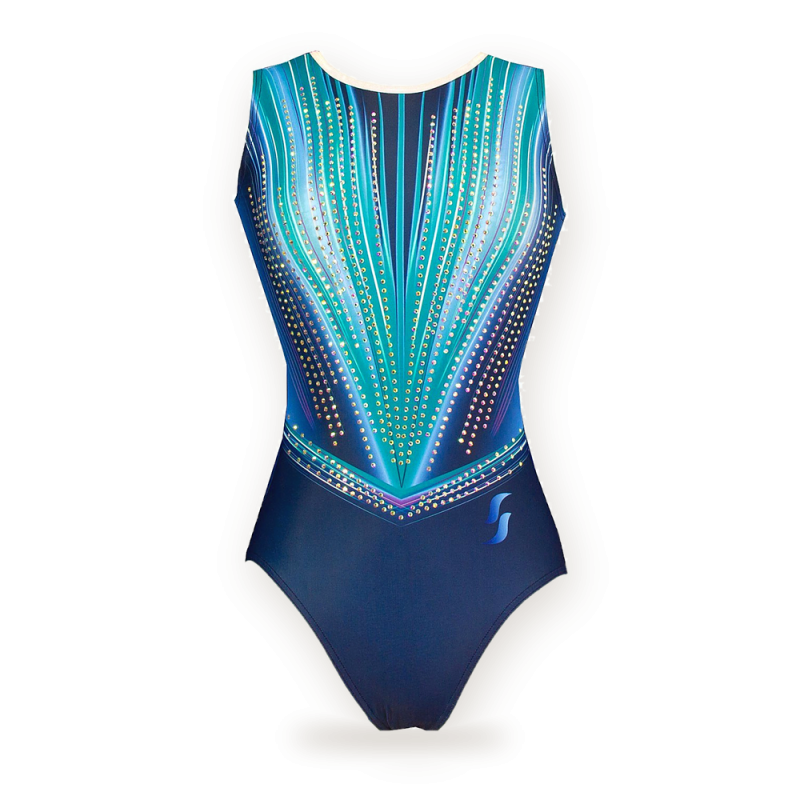
A leotard is more than its base fabric: prints, coatings and embellishments may each have different care requirements. A washable fabric does not automatically mean the finished leotard is washable too. What counts is therefore the care instructions for the finished leotard.
Reading the washtub and the bars
The number in the washtub shows the maximum permitted temperature. You do not have to wash at that temperature. With no bar under the tub, the symbol does not require a particularly gentle cycle.
One bar under the tub calls for a gentler cycle with reduced spinning. For synthetics, fill the drum no more than half full. Two bars call for even less mechanical action and an even smaller load.
| Symbol | Meaning | What it means for the leotard |
| Washtub with number, no bar | Maximum permitted temperature | No gentle cycle required |
| One bar | Gentle cycle | Less spinning, drum no more than half full |
| Two bars | Very gentle cycle | Even less mechanical action, smaller load |
| Hand in the washtub | Hand wash | No machine washing |
| Crossed-out washtub | Do not wash | No washing at home |
Check the other care symbols
A hand in the washtub means hand wash. If the tub is crossed out, the leotard must not be washed at home at all. A crossed-out triangle rules out chlorine and oxygen bleach. This also applies to stain removers that contain such bleaching agents.
A crossed-out tumble dryer symbol rules out the tumble dryer. A dot inside the symbol allows drying at a reduced temperature. In practice, even if the leotard can go in the washing machine, that does not mean it can go in the dryer.
How do you wash a leotard gently?
By hand or in the machine: the label tells you which method is allowed. You then set the temperature and spin speed and choose a suitable detergent.
Choosing between hand washing and the machine
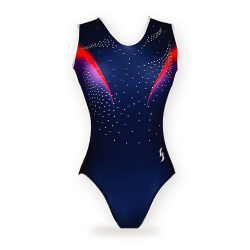
You may only machine wash a leotard if the label or the manufacturer's instructions allow it. If hand washing is specified, a gentle cycle is not automatically a substitute. For its rhinestone leotards, Startner allows both: hand washing or a gentle cycle.
- Dissolve the detergent: dissolve the detergent completely in the water before putting the leotard in.
- Move it gently: swish the leotard gently through the soapy water without rubbing or pulling.
- Do not wring: do not wring the fabric, so the seams and shape stay intact.
Hand washing is not always the better choice for a rhinestone leotard. One manufacturer explicitly rules it out for its models. If the instructions call for machine washing, do not hand wash the leotard anyway.
Setting the temperature and spin speed
Startner recommends washing training leotards inside out on a gentle cycle at 30 °C . For Startner rhinestone leotards, the maximum is 30 °C. These values do not apply to other manufacturers' models.
Elastane can only tolerate a limited amount of heat. A textile care fact sheet from May 2020 therefore recommends not usually washing above 40 °C. Prints or trims may, however, set a lower limit for the finished leotard. In that case, the lower limit applies.
There is no universal spin speed for a rhinestone leotard. The care symbols and the manufacturer's instructions determine how much mechanical stress it can take. If the information is contradictory, check with the manufacturer rather than following someone else's recommendation.
Choosing detergent and additives
For a coloured leotard, a mild liquid detergent for delicates or colours is suitable, if the manufacturer allows it. Optical brighteners can alter colours. For coloured and embellished leotards, the manufacturer's detergent recommendation therefore takes priority.
Startner recommends not using fabric softener, even for its easy-care Lycra training leotards. According to manufacturers, fabric softener can weaken the adhesive holding rhinestones in place. Synthetic fibres do not need it to get clean.
Recommended products
How do you keep rhinestones, prints and colours looking good?
Embellishments and bright colours need special attention before and during washing. Three things matter: how the stones are attached, friction against other surfaces and the risk of colours running.
Check the rhinestones before washing
Rhinestones can be glued or mechanically fixed. You cannot tell from the stone itself how well it will survive a wash. So check the embellishments before every wash.
- Check beforehand: look for loose or missing stones and do not pull on stones that are already wobbly.
- Remove loose stones: do not simply wash stones that have already come off along with the leotard.
- Turn it inside out: Startner recommends turning rhinestone leotards inside out before washing.
- Use a large laundry bag: a laundry bag that is big enough reduces friction against other items.
A laundry bag will not hold loose stones in place. So check the embellishments a second time after washing.
Protecting prints and surfaces
Startner makes its training leotards to withstand frequent washing. Competition models are more elaborately decorated, for example with rhinestones or colour gradients. The difference lies in the printing process and the embellishments.
Many Startner leotards are made using sublimation printing. The colour bonds directly with the fibre instead of sitting on top of the fabric. According to the manufacturer, the fabric stays stretchy and the design does not crack, even after many washes. This also applies to many models in the collection of leotards for girls and women.
Foils, wet-look finishes, holographic fabrics and glitter, on the other hand, are sensitive to abrasion and can lose their shine. Do not wash these leotards with rough fabrics or with items whose Velcro fastenings or zips are open.
Preventing contrasting colours from running
Dark or brightly coloured leotards should not go in with white laundry. Even within a multicoloured leotard, bright areas can bleed onto lighter sections. Do not soak these leotards, and take them out of the machine as soon as the programme finishes.
Several club leotards should only go in the same wash if their colour, material, embellishments and care labels match. Belonging to the same team is not enough. A colour-catcher sheet is an extra precaution but does not reliably protect light-coloured panels from discolouration.
How should you dry and care for the leotard afterwards?
Whether a leotard keeps its shape and stretch also depends on how it is dried. It is also important to know how to handle sweaty kit and to assess any damage realistically.
Dry gently after washing
Carefully absorb excess water with clean towels. Startner recommends drying the leotard flat in the open air and advises against the tumble dryer, as it can damage the elastic fibres. Radiators, high heat and strong sunlight are unsuitable. Only put the leotard away once it is completely dry.
Preventing sweat odour after training
Fresh sweat barely smells. The unpleasant odour only develops when bacteria on the skin break down components of sweat. If the manufacturer requires washing after every training session, airing it out is not enough.
- Out of the bag: take the damp leotard out straight away and spread it out to air until it is washed, rather than leaving it in a plastic bag.
- Dose correctly: dose the detergent according to water hardness, how dirty it is and the load size.
- Wash promptly and dry completely: wash it soon according to the label and let the leotard dry completely. Washing at a higher temperature does not automatically solve the problem.
If you train at least twice a week, Startner recommends having two training leotards. That way you can wear one while the other dries. Both wear out more slowly, which extends their lifespan.
Assessing damage after washing
If rhinestones have fallen off, you need a textile adhesive that suits the fabric and the embellishments. Any old superglue or heat from an iron are not proven solutions.
A worn foil coating or permanently lost stretch cannot be restored by washing. Extra heat does not help either. The manufacturer can assess whether there is a material or manufacturing defect.
Buy leotards direct from the manufacturer
Since 1968, we have been making Lycra leotards in Marseille, with or without rhinestones, for clubs and individuals. Discover them now.
Frequently asked questions
No, it is not essential. One manufacturer even advises against it. Whether a colour or delicates detergent is right depends on the instructions for your leotard.
It is advisable to wash new garments before wearing them for the first time. How you go about it depends on the leotard's care label.
Startner advises against ironing rhinestone leotards, and one manufacturer prohibits it altogether. Never run a hot iron over the stones.
Share this article: