Gymnastics fabrics: Lycra and velvet compared


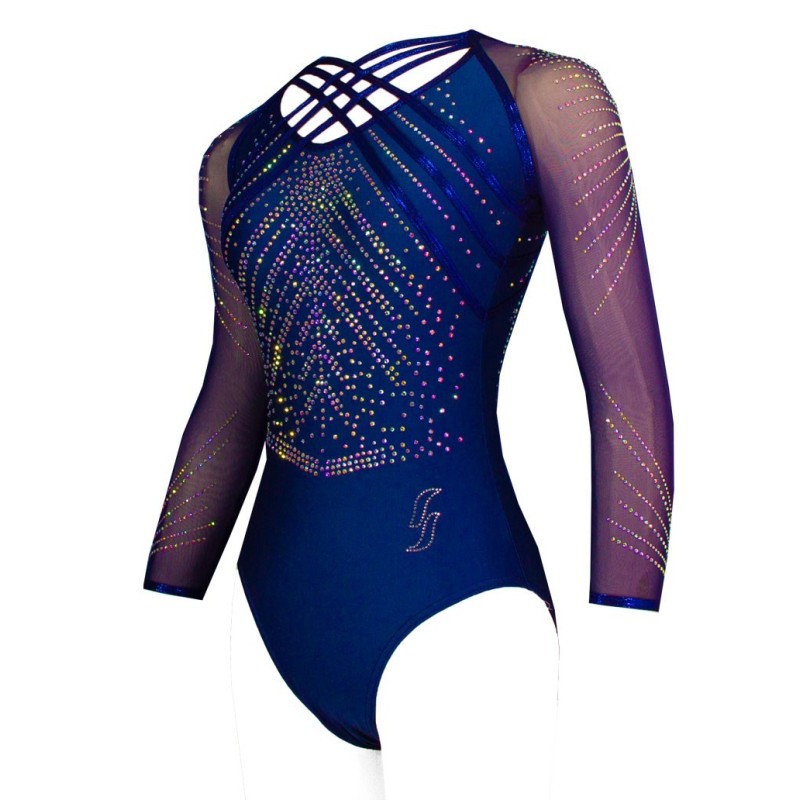
Gymnastics fabrics differ less in name than in fibre, stretch and surface. The examples here come from Startner's gymnastics leotards and club wear.
What sets Lycra, velvet and other gymnastics fabrics apart
Many terms used for leotards mix up three levels: the fibre, how the fabric is constructed and its surface. Keep these levels apart and product descriptions become far easier to read.
What is Lycra?
Lycra is a brand name for an elastane fibre, not a type of fabric in its own right. A Lycra fabric is therefore a fabric whose fibres contain elastane. The EU Textile Labelling Regulation defines elastane as a fibre made of at least 85% by weight of segmented polyurethane. This fibre can stretch to three times its length and largely recovers.
The difference shows in the finished fabric: the stretch value of the fibre does not apply to the material as a whole. Jersey, mesh and velvet describe fabric qualities, whereas the fibre content lists, for example, polyester, polyamide, cotton and elastane.
Knits, mesh and other fabric types
Woven fabrics consist of interlaced threads, whereas knitted fabrics are made of loops. A woven fabric does not become a suitable leotard fabric simply because it contains elastane. In practice, a partly overlapping classification has proved useful, although there is no official list:
- Jersey, interlock and tricot: classic knits for close-fitting garments.
- Swimwear fabric and technical sports fabric: smooth stretch fabrics for tight cuts.
- Mesh and stretch tulle: open or fine qualities for inserts.
- Stretch velvet, panne velvet and sweatshirt fabric: fabrics with a pile or a soft reverse.
Mesh is a net fabric. Open mesh fabrics let air through but can be see-through, so they are better suited to targeted areas than to the main body of a leotard.
Velvet and coated fabrics
Velvet refers to a surface with a pile, meaning upright fibre ends. Stretch velvet can also contain elastane, but the name does not guarantee enough lengthwise stretch: one stretch panne velvet described by its supplier stretches widthways but only minimally lengthways.
Glitter fabrics work on a different principle. They can consist of a stretch base fabric with a silver, holographic or coloured glitter foil applied to it.
Testing stretch and opacity for gymnastics leotards
Only a test on a sample shows whether a fabric works in a leotard. Three checks are part of it: stretch and recovery, opacity under tension and how the seam behaves.
Two-way stretch and recovery
A close-fitting leotard has to give both around the body and lengthways along the torso. That is why two-way stretch fabrics, which stretch in width and length, are the right choice. Test every leotard fabric in four steps:
- Pull lengthways: stretch the sample as far as the cut will be stretched along the torso.
- Pull widthways: repeat the test around the body, as widthways stretch alone is not enough.
- Let go: check whether the fabric returns to its shape.
- Inspect: if the sample stays wavy or baggy, it is not stable enough for a close-fitting leotard.
Stretch and recovery are separate properties, and the elastane content gives no reliable figure for either. The standard DIN EN ISO 20932-1, February 2022 edition, describes a laboratory test of elasticity.
Opacity under tension
A fabric that is opaque when flat can become see-through over the hips or bottom. Light colours, prints, thin areas and seams are the critical points. Hold a stretched sample in front of a contrasting background and look at it in daylight and under gym lighting.
This test is practical but not standardised. Neither a higher fabric weight nor a darker colour proves opacity on its own. If needed, a stretch lining can improve coverage, provided all the fabric layers together remain stretchy enough.
Testing fabric and seam together
When sewing a leotard, the seam must stay stretchy too. Pull a test seam in the direction in which it will later be under strain.
Just as revealing is a fabric sample washed and dried according to the care instructions before cutting. It shows any shrinkage and changes to the surface before the whole length of fabric is used.
What makes a good leotard fabric
- Two-way stretch: stretches in width and length
- Good recovery after stretching
- Opaque, even under tension
- Fabric and seam give together

Recommended products
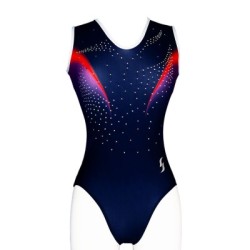
How colours and surfaces look on a leotard
The choice of colour is closely linked to the surface: the same shade looks different on matt Lycra than on velvet or metallic fabric.
Matt, shiny or metallic
Smooth stretch knits can be matt or shiny depending on the finish. The surfaces differ as follows:
- Matt: a calm look without reflections.
- Shiny: a special finish can create an intense, wet-look shine.
- Shimmering: can make colours look more intense.
Lycra, velvet and crushed velvet may come in different colour ranges. A shade you like in Lycra is therefore not necessarily available in velvet.
Colours on screen may differ from the actual shade. Order fabric swatches to compare colour and the look of the material in real light.
Pile and nap direction in velvet
Plain velvet has an even surface, while crushed velvet looks irregular, slightly creased and shimmers in the light. With stretch velvet, the pile and nap direction change the sheen and the way the colour appears. In practice, this means visible pattern pieces are cut with the nap running the same way, which can increase waste.
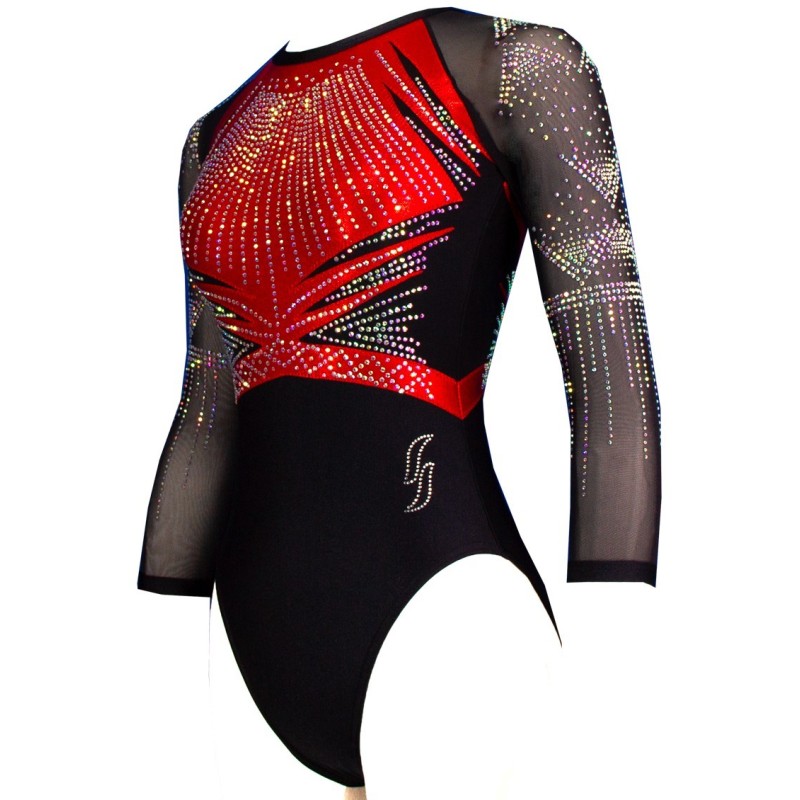
Smooth velvet makes a calm base for embellishments. Startner makes the Rebecca-02 gymnastics leotard in black velvet, with a geometric rhinestone pattern running down the front and along the sleeves. The style is available with long embellished sleeves or sleeveless.
Contrasts and club colours
Several materials can also be combined in one leotard. On the Dolly08 leotard, Startner pairs black velvet with white Lycra, plus a motif in pink metallic fabric that wraps around the body. The same fabric forms the stand-up collar and the teardrop back opening. Startner describes the style as light and breathable, and the fabrics as supportive with good comfort during performances; clubs choose the colours themselves.
Light and dark combinations call for care, as sweat, friction or washing can cause colour transfer. Wash samples of both fabrics together according to the care instructions before sewing them together, so that you spot any colour bleeding in good time.
Choosing the right fabric for use and purchase
The right fabric depends on how it will be used: regular training, the stage or competition with its own rules. Then comes the comparison of specific fabrics sold by the metre.
Training, dance and club wear
Among sportswear fabrics, polyamide knit with elastane is one possible choice for close-fitting gymnastics wear: polyamide is considered soft, abrasion-resistant and stable even when heavily stretched. Polyester is considered light, durable and quick-drying. Pure cotton absorbs sweat and dries slowly; cotton jersey with elastane is better suited to more relaxed training wear. For stage dancewear, drape, shine and the effect under lights matter more. For clubs, Startner designs personalised club leotards with logos, colours and rhinestones.
Material rules in competition
For competitions, the event announcement and the current rules of the discipline concerned are what count. In rhythmic gymnastics, the German Gymnastics Federation (DTB) code of points 2025–2028 sets out which materials a leotard may show:
- Chest to crotch: opaque material, transparent areas lined.
- Sleeves: transparent versions allowed.
- Pelvis, crotch and bottom: covered at the front up to the top of the hip bone with opaque, non-skin-coloured material.
- Breach: a non-compliant leotard can lead to a 0.30-point deduction.
The FIG lists the revised version of the rhythmic gymnastics rules as valid since 1 April 2025. Older fact sheets are therefore not enough for checking compliance.
Other disciplines have their own requirements. For women's recreational artistic gymnastics, the DTB's 2026 guidelines also require an opaque gymnastics leotard.
Comparing fabric by the metre on concrete specifications
When buying fabric by the metre, what counts is the fibre content, construction, width, fabric weight, direction of stretch and care instructions. Under the EU Textile Labelling Regulation of 27 September 2011, fibre names and percentages by weight must be stated and made known to the buyer for fabric by the metre too. Three specific items show the range:
| Fabric | Composition | Fabric weight | Width |
| Gymnastics Lycra | 80% polyamide, 20% elastane | approx. 210 g/m² | 150 cm |
| Stretch velvet | 96% polyester, 4% elastane | approx. 190 g/m² | 145 cm |
| Transparent stretch mesh | 90% polyester, 10% elastane | approx. 85 g/m² | – |
These values describe individual items, not general recipes. A price per metre also does not reflect the cost of a finished leotard: fabric consumption, waste, lining, pattern and making up all come on top. For club groups, size coordination and later repeat orders also need to be planned for.
Lycra and velvet leotards direct from the manufacturer
Since 1968 we have been making gymnastics wear in Lycra, velvet and metallic fabric in Marseille, for clubs and individuals.
Frequently asked questions
For stretch to high-stretch knits, documentation from a needle manufacturer recommends a stretch needle, among other things to prevent skipped stitches. Test the finished seam by pulling it in the direction it will later be stretched, as it must stay elastic.
Under German law, § 312g BGB excludes the right of withdrawal for private online purchases of goods whose production is largely individually specified or tailored to personal needs. This does not mean there is a blanket exclusion for every length sold by the metre.
The fibre name alone does not tell you: air exchange, moisture transport, fabric thickness and the construction of the garment determine comfort. Hohenstein measures water vapour resistance using a skin model in accordance with DIN EN ISO 11092; air permeability is a separate measure under DIN EN ISO 9237.
Share this article: