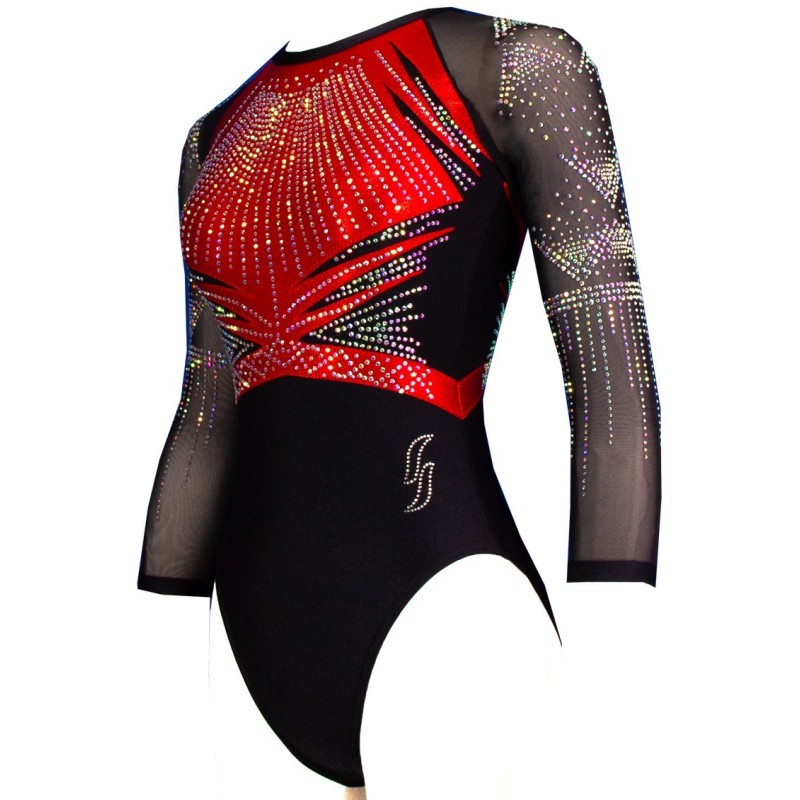
Boys' gymnastics leotard: how to choose the right fit


A gymnastics leotard for children and boys has to stay securely in place in training just as it does in competition. This guide is based on the gymnastics leotards made by Startner in Marseille.
What size gymnastics leotard does a boy need?
Age and usual T-shirt size are not enough to work out the size. What matters are current body measurements and the size chart of the specific model. Two manufacturers can use the same size label, yet their leotards still fit differently.
Measuring height and torso length
To measure height, the child stands up straight against a wall without shoes. The head stays level and the posture relaxed. Measure from the floor to the highest point of the head.
Some size charts also include the girth (torso) measurement. In practice, this means running the tape measure, without twisting it, from the shoulder down the front, through the crotch and up the back to the shoulder again. This measurement shows whether a boys' gymnastics leotard is the right length for the upper body.
Comparing chest, waist and hips
After the length measurements come three circumferences. The tape should lie flat without pulling tight:
- Chest: horizontally at the widest point of the ribcage, under the arms. The child should not deliberately breathe in.
- Waist: at the natural waist, with the tape resting loosely. The tummy is not pulled in.
- Hips: horizontally over the fullest part of the bottom.
A children's size chart based on height alone is only a rough guide. So check every measurement listed in the chosen model's size chart.
Choosing between two sizes
If the measurements fall between two sizes, the manufacturer's recommendation and, where possible, trying on both sizes will help. A size number such as 26 only applies to that particular manufacturer. According to the guide to children's leotard sizes and fit by Startner, the 145–155 cm range for a children's kit set cannot be applied to gymnastics leotards.
The larger size must also fit securely right now and pass the movement test. That is why Startner advises against buying a size up just in case. In size 140, check the torso length as well as the height. If the fabric pulls at the crotch or shoulders, switching to 146 or 152 will not reliably solve the problem.
Please note
Don't buy a gymnastics leotard to grow into
Age and T-shirt size can be misleading. Choose the size based on current body measurements and the size chart of the specific model. Only then will the leotard stay securely in place in training and competition.
How can you tell if a gymnastics leotard fits properly?
Measurements narrow down the choice, but only a fitting shows whether the leotard really fits. A well-fitting gymnastics leotard sits close to the body without restricting it. Check this first standing still, then in motion.
Checking the fit standing still
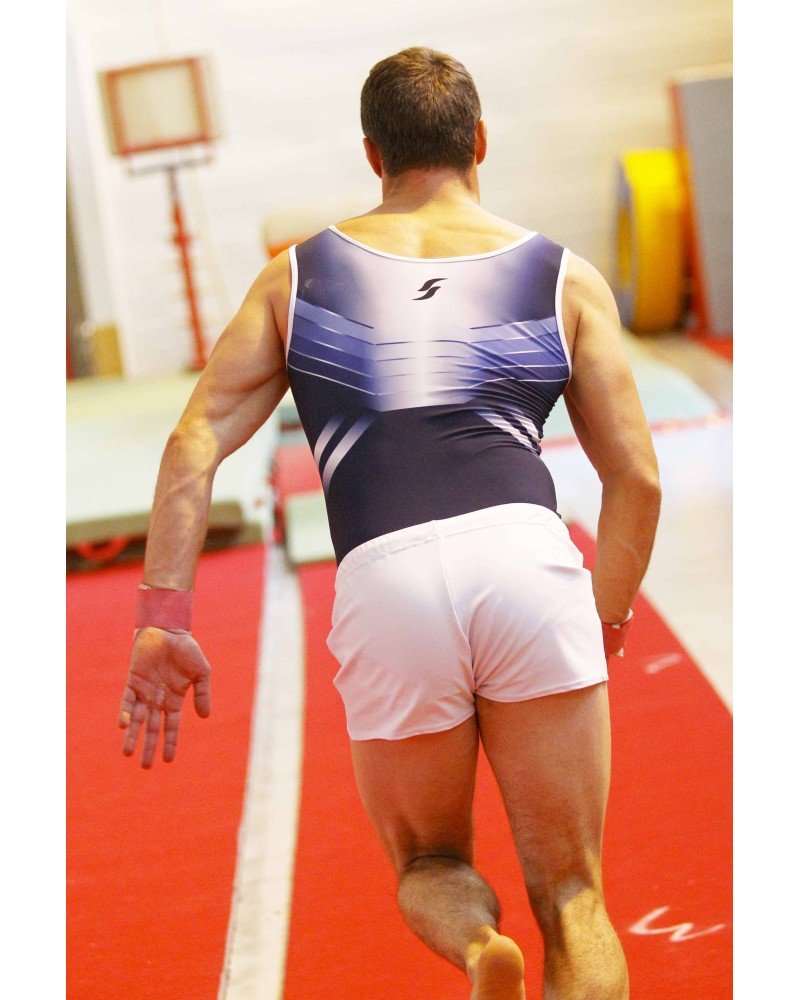
The leotard sits close at the shoulders, chest and torso and does not dig in under the arms. Startner recommends trying it on with exactly the layer of clothing that will be worn underneath. When standing, look out for these signs:
- Too tight: strong pull across the chest or shoulders and a neckline that drags.
- Twisted seams: another sign that the fabric is under tension.
- Too loose: a gaping neckline and excessive creases.
- Slipping fabric: the leotard shifts with even small movements.
Too much room is more than a question of looks. A leotard that slips a lot can make it harder for the coach to spot during gymnastics.
Testing freedom of movement in practice
Freedom of movement only shows in typical positions. Ask the child to do the following movements one after the other:
- Arms above the head: the fabric does not ride up.
- Deep squat: nothing digs in.
- Bending and stretching the torso: the leotard stays in place.
- Age-appropriate bridge: this shows whether the leotard pulls at the crotch, even if it looks right when standing.
Then come familiar exercises such as a handstand or support, under suitable supervision. The leotard should stay in place on the upper body and at the crotch. Seams must not press or rub.
Allowing for particular body shapes
With a long torso and narrow shoulders, check the torso measurement and shoulder fit separately. A larger size will not necessarily improve both. With a broader upper body, the armholes, neckline and freedom of movement with the arms raised matter most.
With a fuller waist or hips, tension creases and rolling fabric point to an unsuitable fit. For very slim children, on the other hand, a gaping neckline and slipping fabric indicate too much room.
Which fabric and style suit training?
Once the size is settled, two questions remain: which sleeve length and which fabric. Both affect fit, comfort and durability in regular training.
Long-sleeved, short-sleeved or sleeveless gymnastics leotard?
In artistic gymnastics, boys can wear sleeveless, short-sleeved and long-sleeved models. Sleeve length alone does not decide whether a model is suitable. What matters is how each version fits in motion:
- Long sleeves: the sleeves do not restrict handstands, support, hangs or swings.
- Over the hands: long sleeves must not slip in these positions.
- Short sleeves: the sleeve does not pull when the arms are raised.
- Sleeveless: the leotard sits securely at the shoulders and torso.
A long-sleeved boys' gymnastics leotard has to pass these checks just like a short-sleeved one. Go for the version that stays most settled during the child's exercises.
Is any gymnastics leotard suitable for artistic gymnastics?
The name alone tells you nothing. Just because a garment is sold as a gymnastics leotard does not mean it suits boys in men's artistic gymnastics.
In men's artistic gymnastics, a close-fitting leotard is usually combined with separate gymnastics shorts or trousers. A sleeveless leotard, by contrast, is a one-piece.
Startner designs and makes clothing for men's artistic gymnastics in Marseille, using technical Lycra fabrics.
Checking fabric, finish and care
The difference shows when stretching: the fabric follows bending and stretching, then returns to its shape and stays opaque. Also check these points:
- Elastane content: it compensates for small differences but will not make a leotard that is too small fit.
- Seams and labels: they must not irritate the skin, and neither should rough trims.
- Cuffs and prints: they hold up to regular movement and washing.
- Embellishments: the same durability requirement applies to them.
For washing, follow the care label of the specific model. Printed or coated fabrics can be sensitive to friction, heat and detergents.
What are the rules for leotard and shorts in competition?
A leotard that has proved itself in training is not automatically allowed at every competition. What may be worn is set by the rules, the competition notice and the club.
Checking the competition notice and age group
Before buying, clarify the following points:
- Rules: the requirements for the age group and discipline.
- Competition notice: the clothing rules for that particular competition.
- Club: any required combination.
- Bottoms: whether shorts or long trousers are required.
Choosing leotard and shorts together
For men's artistic gymnastics, Startner recommends short gymnastics shorts on floor and vault, and long gymnastics trousers with foot straps on pommel horse, rings, parallel bars and high bar. A long-sleeved leotard is not generally required. When choosing gymnastics leotards for boys and men, separate size charts may apply to the leotard and the trousers. So check the leg length and test the full outfit with familiar movements.
Matching the club kit to the competition rules
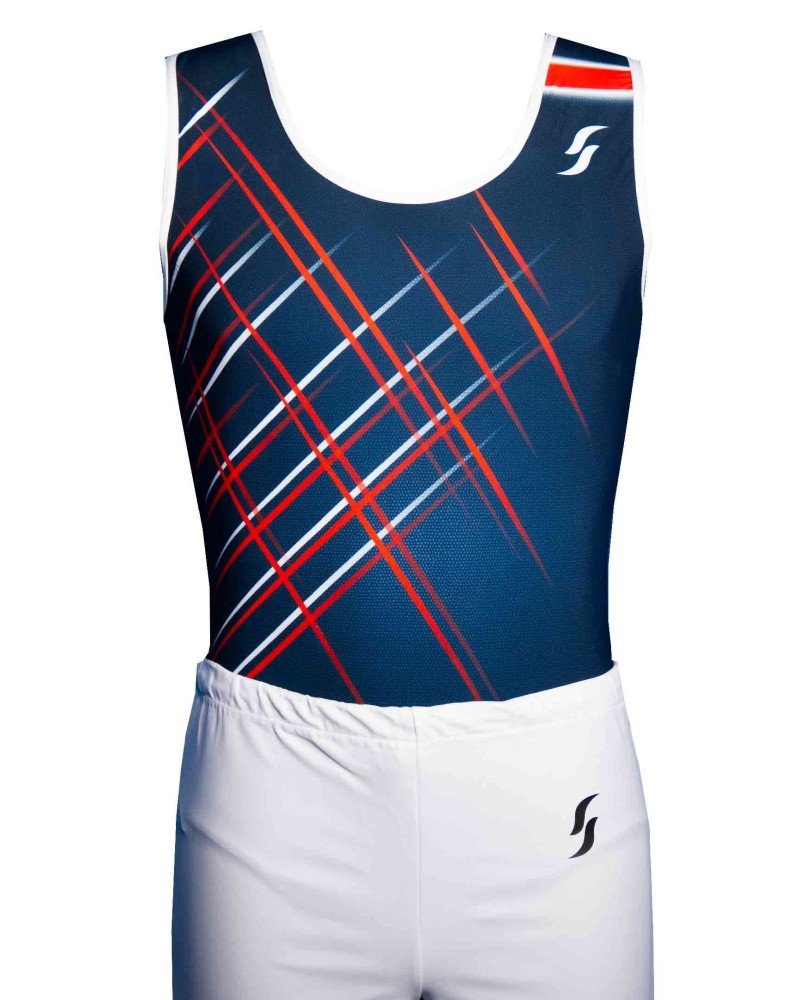
In Marseille, Startner makes the navy blue Octave-01 gymnastics leotard for boys and men, for training and competition on the men's artistic gymnastics apparatus. For clubs, Startner offers customisable gymnastics clothing in club colours. Before a group order, clarify the combination required by the club and check sample sizes.
Boys' gymnastics leotards straight from the maker
Since 1968 we have been making gymnastics leotards in Marseille for training and competition, for clubs and families. Find the right model now.
Frequently asked questions
Not automatically. Size systems differ between manufacturers and cuts, so the same label does not guarantee the same fit. The fabric and sleeve length of a trial leotard may also differ from the final model.
Rough surfaces and hook-and-loop fasteners can cause pilling on printed gymnastics leotards. Printed fabrics can also be sensitive to friction, heat and detergents. The care label of the specific model is what counts.
The Octave-01 is navy blue. Startner also offers the same model as the Octave-02 in white, blue and yellow.
Share this article: