Size 26 for children: measurements and gymnastics leotard fit


Size 26 on a children’s top or leotard often raises questions, because the number refers neither to an age nor to a body measurement. Startner explains how to place this size correctly using the size chart, your child’s measurements and the freedom of movement a gymnastics leotard needs.
What does size 26 mean for children’s sportswear?
Size 26 is a nominal or set size that each manufacturer defines for itself. Only that manufacturer’s own chart shows which measurements lie behind it. A particular numbering system for children’s kit sets is a useful example for understanding the order of magnitude.
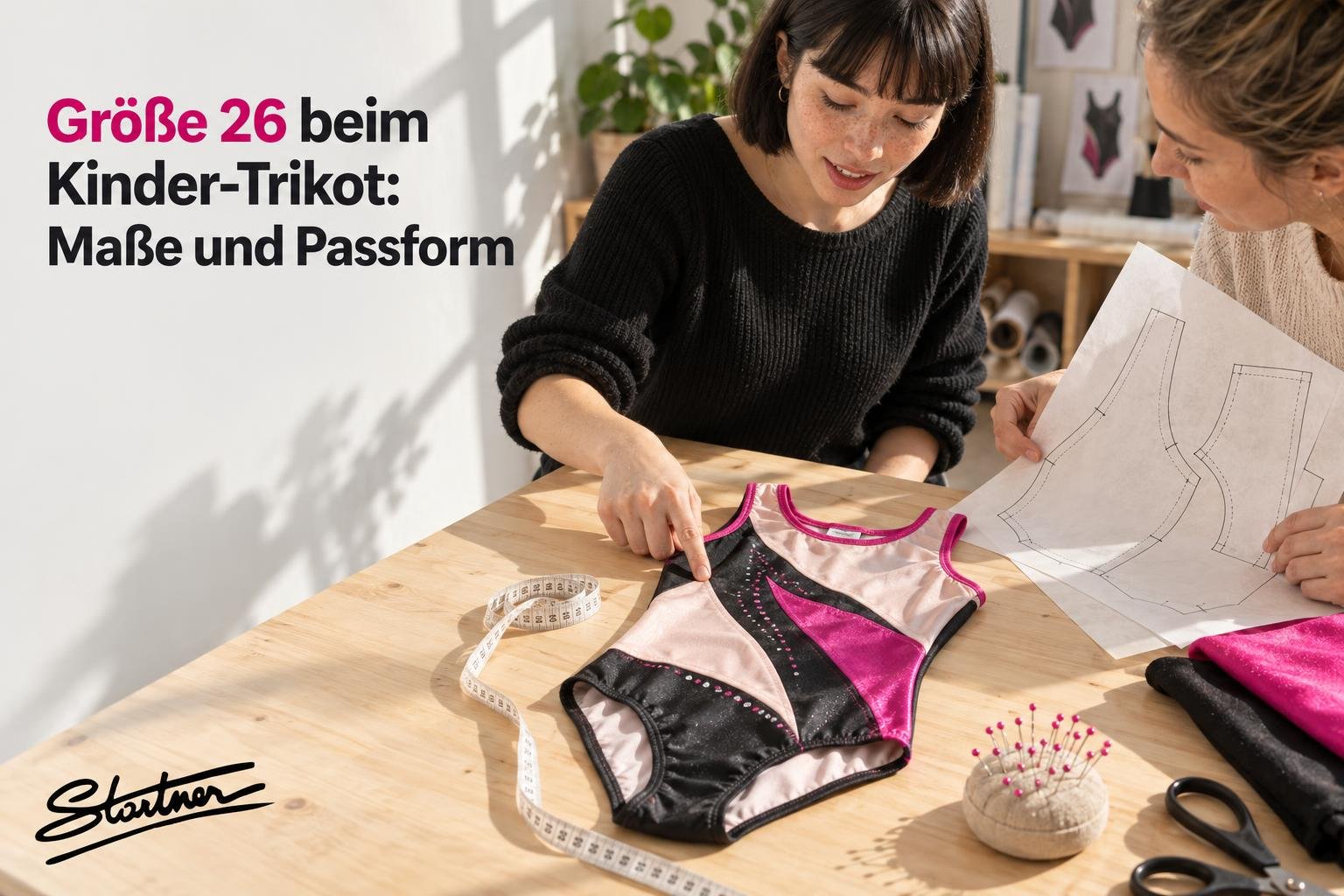
A number with no universal meaning
The 26 does not stand for a height of 26 cm or an age of 26 months. Nor is it a shirt number 26 on the back: that personalises the kit and says nothing about the garment size. The DIN EN 13402-3:2017-12 standard does describe size designations based on body measurements and size intervals, including for children, but it does not set out a universal kit size 26.
Letter sizes are not standardised either. Some charts also list size 26 as XL and size 28 as XXL. Such an XL or XXL equivalence only applies within that particular sizing system. With another manufacturer, XXL may correspond to an entirely different number.
Height, age and weight in the example system
In the example numbering system for children’s kit sets, size 26 corresponds to a height of 145–155 cm. This range cannot be transferred to gymnastics leotards or to other manufacturers. On age, the charts differ: some state 10–11 years, others 11–12 years.
Age is therefore only a rough guide. One further chart also gives a body weight of 50–55 kg. Weight, however, is not a requirement for this size across manufacturers.
| Criterion | Value for size 26 in the example system |
| Height | 145–155 cm |
| Age (rough guide) | 10–11 or 11–12 years, depending on the chart |
| Body weight (single chart) | 50–55 kg |
| Letter size (some charts) | XL; size 28 corresponds to XXL there |
Garment measurements of the example kit set
Besides body measurements, some charts in this system also give the measurements of the garment itself. For the size 26 top, these are a length of 59 cm and a shoulder width of 43 cm. The set includes a pair of shorts about 40 cm long. These values apply only to this example set.
When measuring yourself, distinguish between two kinds of deviation. Manufacturing itself causes deviations of 1–2 cm or 2–3 cm, depending on the product. A measuring variation of about 1 cm, on the other hand, arises when you measure with a tape measure at home.
How do you measure for the right size?
Since the number on its own tells you little, your child’s body measurements are what count. All you need is a tape measure, a clear wall and a well-fitting leotard for comparison.
Measuring height, chest and waist
Three body measurements form the basis of every size chart. Here is how to take them correctly:
- Height: the child stands up straight against a wall without shoes; measure from the floor to the highest point of the head.
- Chest: the tape lies horizontally around the fullest part of the chest, without the child deliberately breathing in or pushing the chest out.
- Waist: the tape sits loosely around the narrowest part of the torso.
The waist deserves particular attention with close-fitting styles. With looser cuts it matters less.
Checking torso length and an existing leotard
For torso length, run the tape from the shoulder point over the centre of the chest down to the desired hem length. Compare this measuring point with the definition in the manufacturer’s chart, as manufacturers measure torso length in different ways.
A well-fitting leotard gives you extra reference values. Lay it flat and measure from armpit to armpit and from the neckline to the hem. Compare these figures with the stated garment measurements.
Measuring the torso is worthwhile even within a single size range. Children who are 148 cm and 154 cm tall both fall within the example range for size 26. Their chest measurement, torso length and the freedom of movement they need can still differ considerably.
Comparing your measurements with the size chart
For children’s sportswear, height is usually the primary measurement, while chest circumference shows the width and freedom of movement required. Many charts also list waist and hip measurements and an approximate age. Bear in mind that body circumferences and widths measured on the garment are not the same thing.
In practice, this means the size chart and measuring guide for the specific garment are what matter, supplemented for clubs by the club supplier’s chart. Do not carry over figures from other manufacturers without checking them.
Please note
Ordering leotards too big to grow into
A leotard that is too loose slips during gymnastics and can even become dangerous during some elements. Always choose the size that matches your child’s current measurements, using the manufacturer’s official size chart as your guide.
Recommended products
Which leotard size gives enough freedom of movement?
For a gymnastics leotard, the measurements of a kit set are not enough. The leotard encloses the whole torso and must stay securely in place during jumps, stretches and somersaults.
Torso measurement and fit in motion
Besides height, the fit of a leotard depends on the shoulder-to-crotch measurement, i.e. the torso length from shoulder to crotch, as well as chest, waist and hips. The construction of the leotard also plays a part.
Whether these measurements are right only shows on the child. During the fitting, check the following points:
- Standing: the leotard does not pull hard at the crotch.
- In motion: the leg openings do not dig in uncomfortably.
- After the exercise: the leg openings have not ridden up.
For regulated gymnastics wear, the German Gymnastics Federation’s DTB-Leitfaden Gerätturnen Breitensport 2025 guideline specifies a strap width of at least 2 cm and rules on the leg cut. It does not define a size 26.
Cut and style at the fitting
Startner’s collection of personalised gymnastics leotards ranges from simple training styles to embellished competition leotards. Every cut fits differently and should be judged individually. With the plain and embellished gymnastics leotards, too, the exact cut remains decisive even when the stated size is the same.
The difference lies in the details of the construction. The sleeveless ODILE02 leotard in plum has a boat neckline, a low back, metallic decorative stripes and a row of rhinestones at the front. Check how features like these affect freedom of movement during the fitting.
Stretch, layers and in-between sizes
Startner makes its gymnastics wear from technical Lycra fabrics. A fabric with elastane can make up for small differences in fit more easily than a fabric with little stretch. A leotard that is too small will still be uncomfortable, so the right size is still essential.
If your child is between two sizes, the larger one leaves more room for growth or for layers underneath, while the smaller one gives a deliberately snugger fit. The choice will therefore differ for a close-fitting competition leotard and a looser training leotard. Try the leotard on with whatever will be worn underneath later: directly on the skin, over a sports top or over a thin thermal layer.
Children’s gymnastics leotards direct from the maker
Since 1968 we have been making gymnastics wear in Marseille for clubs and families. Find the right size for your child.
Frequently asked questions
In children, leg length and shoulder width change, for example, so a leotard that fitted until now can suddenly feel tight. Torso length also shows whether the leotard rides up during movement.
A single style does not have to come in every size of its manufacturer’s general children’s sizing system. So always check the size chart for the specific garment first, along with its measuring guide and, where relevant, the club supplier’s chart.
The care label is what counts. Do not iron technical fabrics on a hot setting. Avoid any detergents the manufacturer explicitly warns against.
Share this article:





Similar posts
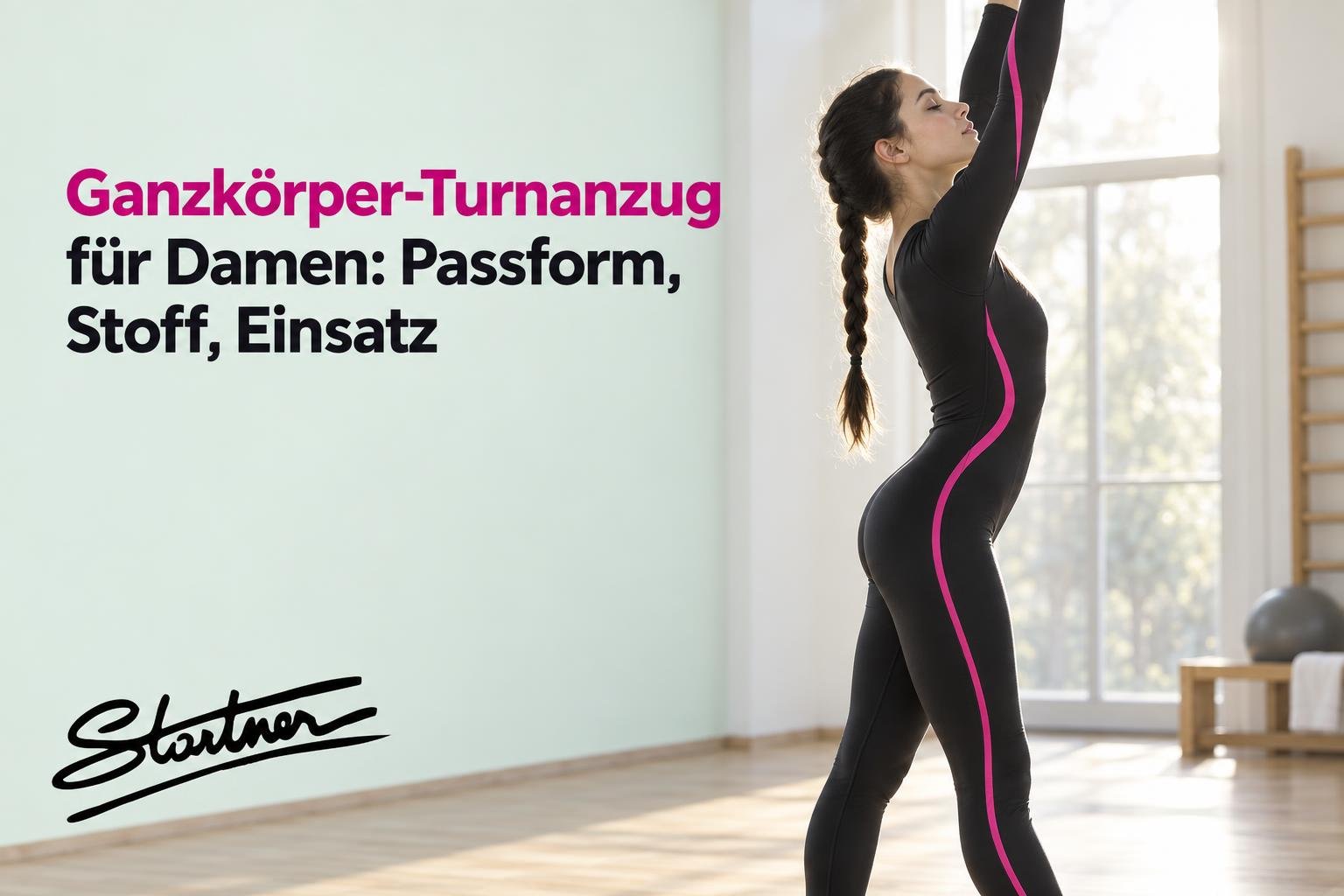
Women's full-body gymnastics leotard: fit, fabric and rules
Women's full-body gymnastics leotards: how to choose the cut, size and Lycra fabric, and check DTB and FIG rules, so your leotard works for both training and competition.
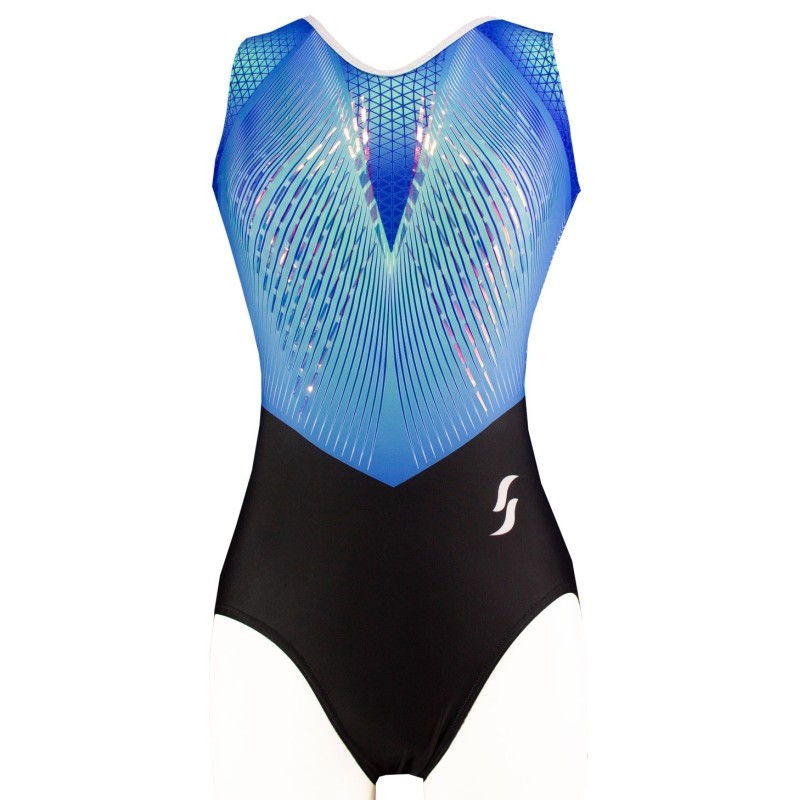
How to Measure for a Gymnastics Leotard: Size Guide
Bust, waist, hips and torso length: how to measure correctly for a gymnastics leotard, training leotard or gym wear – including made-to-measure club leotards.