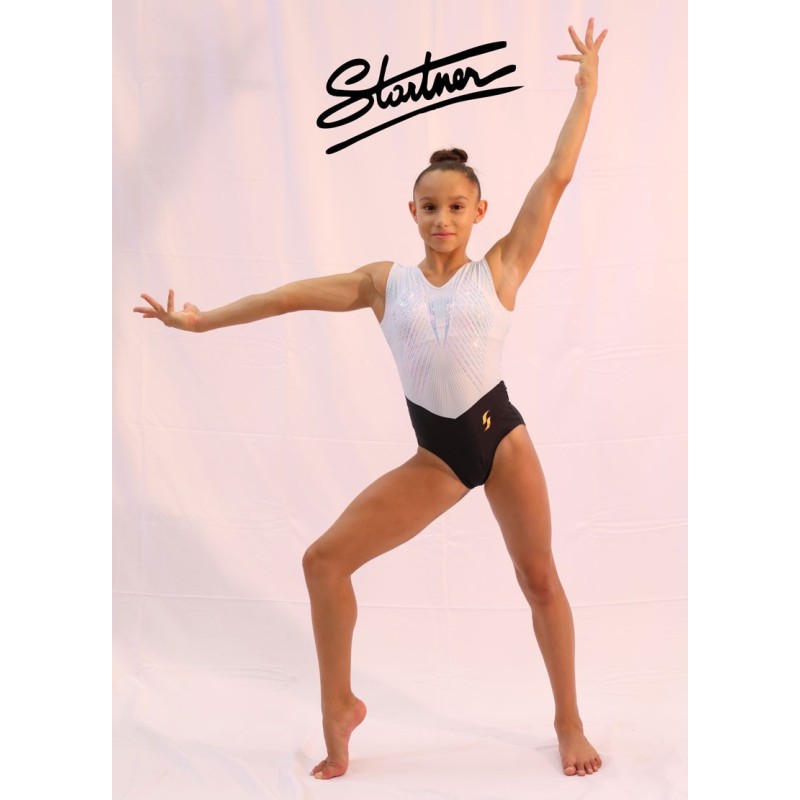
Plus-size gymnastics leotard: fit and choosing your size


A plus-size gymnastics leotard only fits well if the measurements are right and the model’s size chart is read correctly. What matters are accurate body measurements, looking at each sizing system separately and a movement test when trying it on. If the leotard still doesn’t fit, the right of withdrawal and the legal guarantee determine what happens next.
How do I measure correctly for a gymnastics leotard?
A close-fitting gymnastics leotard leaves little room for measuring errors. The size is therefore based on several values: your height, three circumferences and, depending on the model, additional length measurements.
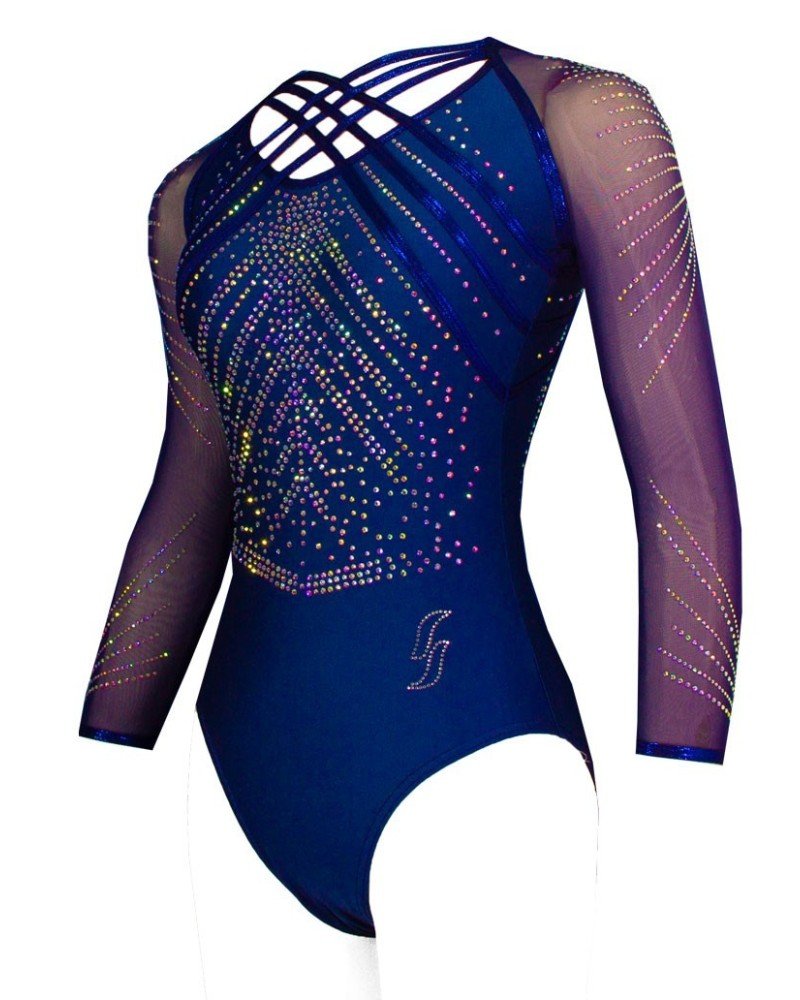
Measuring height and circumferences
Measure your height standing upright and without shoes. Then take the three circumferences, each at a precisely defined point:
- Bust: The tape runs horizontally under the arms across the fullest part of the bust.
- Waist: Measure at the natural, narrowest point, without pulling your stomach in.
- Hips: The tape goes around the fullest part of the hips and bottom.
Measuring torso length and additional measurements
For a one-piece, the torso girth also determines the fit. The tape starts at the front of the shoulder, runs through the crotch, up over the back and back to the starting point.
For a full-body leotard with legs, you will also need your inside leg measurement. Only with this measurement can this type of gymwear be chosen reliably.
Measuring under the right conditions
The tape should lie gently against the body and be kept horizontal for the circumferences. In practice, this means measuring, if possible, in the underwear you will later wear under the leotard. How to match the values you obtain is explained in the guide to the women’s gymnastics leotard size chart.
Which size fits for XXL and inch sizes?
Your own measurements are only the start of the actual choice. Plus sizes carry very different labels depending on the manufacturer, and labels that sound the same do not mean the same fit.
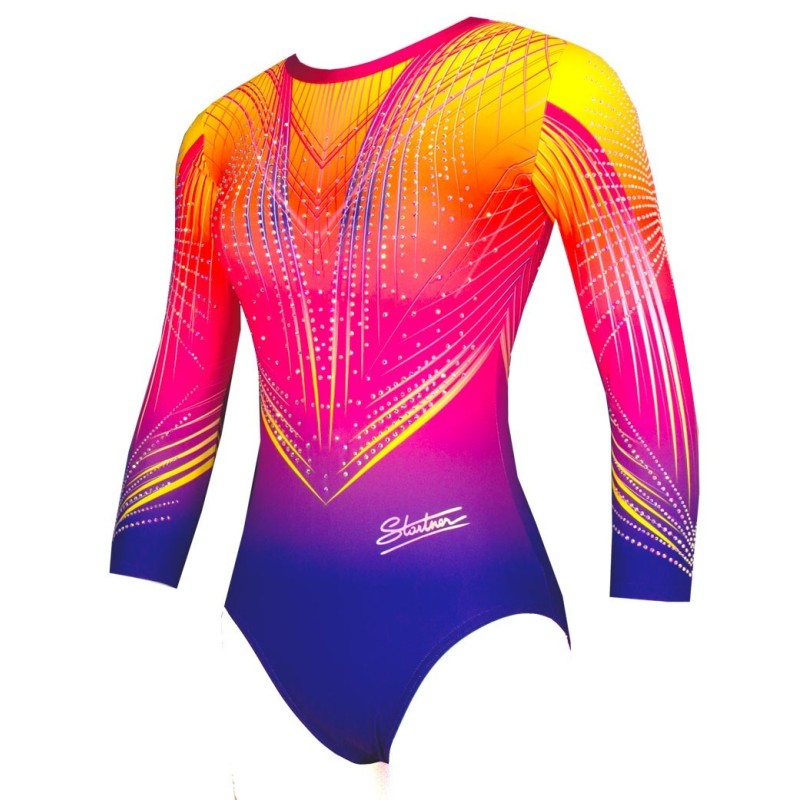
Understanding leotards for girls and women
There is no uniform XXL standard for girls’ and women’s gymnastics leotards. You should therefore look at national clothing sizes (such as German sizes), manufacturer sizes and international labels separately.
Startner offers gymnastics leotards for girls and women, with women’s sizes from 36 to 46. This range describes Startner’s collection, not a general upper limit.
Other standard ranges for women and girls go from 34 to 48 in adult sizes. However, a size appearing in a chart does not prove that every model is available in it.
Comparing conflicting size labels
A conversion chart shows how far apart the systems are: there, manufacturer size 48 corresponds to German size 46 and manufacturer size 50 to German size 48, both labelled L. Another chart already calls manufacturer size 46 XXL.
One inch system for adult leotards runs from 32″ to 42″, and 38″ there is not a clothing size 38. Likewise, another label equates A3XL with the number 42, so a 3XL label alone does not allow a comparison.
| Sizing system | Value | Equivalent |
| Manufacturer size | 48 | German size 46, L, waist 100 cm |
| Manufacturer size | 50 | German size 48, L, waist 105 cm |
| Other manufacturer chart | 46 | XXL |
| Inch system | 38″ | Torso girth 147–152 cm |
| Inch system | 42″ | Torso girth 165–172 cm |
| Other label | A3XL | Number 42 |
Using the model’s size chart to choose
Size charts compare measured body dimensions with body measurement ranges, whereas garment measurements should only be compared with garment measurements. Also check whether the chart assigns sizes mainly by height or by torso girth. If no height range is given for the larger sizes, the fit of the model needs to be clarified.
If your measurements fall into different size ranges, all your values together with the model name are useful for getting advice on cut and torso length. One manufacturer’s size advice suggests a larger size as an option if you explicitly want a looser fit.
Which cut fits well when trying it on?
The torso length you measured shows up again when you try the leotard on. A leotard can fit at the stomach and hips and still be too short between shoulder and crotch.
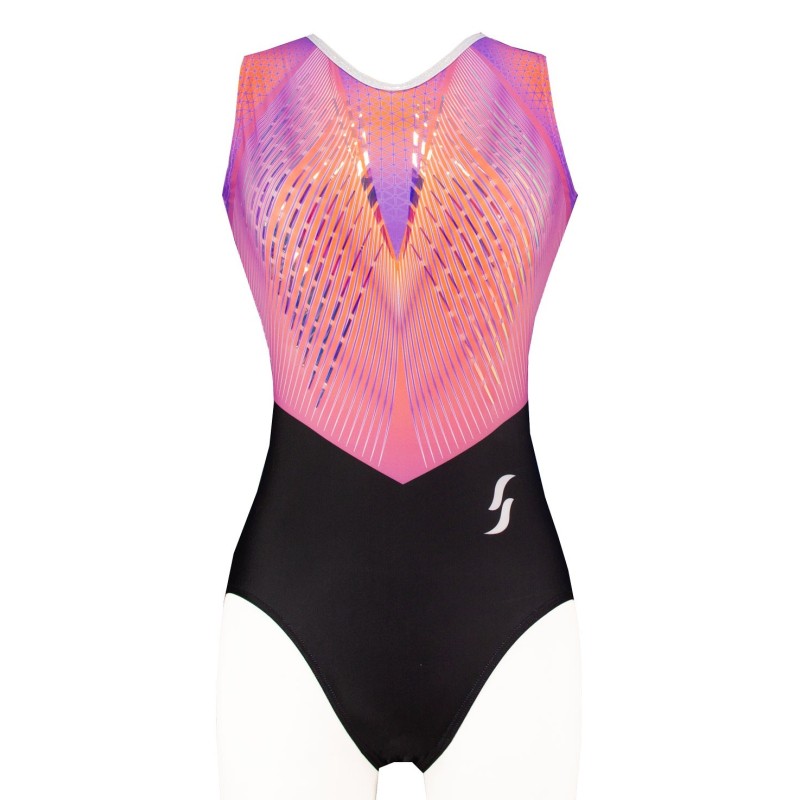
Assessing torso length and cut
A lack of torso length can show itself through typical tension points:
- Shoulders: The straps pull noticeably downwards.
- Crotch: The fabric is under tension.
- Leg openings: They ride up.
- Arms: Raising your arms is restricted.
If the bust and hips fit but your torso girth is outside the chart, a longer cut may make more sense than a leotard that is bigger overall. Shoulder width and armholes also affect the fit.
Long or short sleeves for a gymnastics leotard?
Startner makes gymnastics leotards with long sleeves, short sleeves or no sleeves. Sleeveless models give the arms plenty of freedom of movement, while long-sleeved models cover them more. For artistic and rhythmic gymnastics, Startner offers a range of training leotards; Startner designs its competition models more elaborately with rhinestones or colour gradients, and club leotards can also have their own colours and logo.
For regular training, hard-wearing fabrics and durable seams matter. Stretch materials such as polyamide or polyester with elastane can differ in recovery and thickness, which shapes comfort and fit. Bust support, opacity and lining depend on the inner construction; a leotard does not automatically replace a sports bra.
Checking the leotard in motion
When it fits well, a close-fitting leotard lies evenly against the bust and hips, without large folds on the stomach or back. Some fabric tension is fine; pain or restricted movement is not. Check the fit with a short sequence of movements:
- Raise your arms: The leotard stays put at the shoulders and crotch.
- Squat: The leg openings do not dig in.
- Lunge and forward bend: Afterwards, the leotard sits correctly again without being adjusted.
- Back bend and leg lift: They reveal any additional pull.
Pay attention to details too: straps must not slip and the neckline should lie flat. Seams do not strain when you move, and stretched fabric does not look see-through.
Tip
Choosing the right plus size
Compare your height, circumferences and torso length with the chart for the specific model, and check the fit in motion when trying it on – not just the label.
What to do if the leotard doesn’t fit?
If the movement test at home shows that the leotard doesn’t fit, what happens next depends on how you bought it and on the type of leotard.
Checking the right of withdrawal for online orders
For an ordinary standard leotard bought online, a right of withdrawal generally applies. Four points are decisive:
- 14-day period: It runs from receipt of the goods.
- Notice to the retailer: Simply sending the item back is not enough.
- Return: The goods must be sent back within a further 14 days; keep your proof of postage.
- Costs: The buyer pays for the return if the retailer has informed her in advance and does not voluntarily cover it; the cheapest standard delivery is refunded, not an express surcharge.
For goods that are not prefabricated but made according to personal choice or specifications, the right of withdrawal may be excluded. However, a standard size or production only after ordering does not automatically make a leotard a made-to-measure item.
Distinguishing exchanges from complaints
Simply trying the item on is permitted when withdrawing; for any loss in value beyond that, compensation may be due. In a shop, there is no statutory right to an exchange merely because the fit is wrong; Startner’s exchange service is separate from the right of withdrawal.
It is different if a leotard is faulty rather than just ill-fitting. In that case, first ask the seller for a repair or replacement; in the EU, new goods are generally covered by a legal guarantee of at least two years from delivery. The seller bears the transport costs this requires.
Buy leotards direct from the manufacturer
Since 1968, we have been making gymnastics leotards for girls and women in Marseille, with women’s sizes from 36 to 46. Discover them now.
Frequently asked questions
What should you look out for when ordering a plus-size leotard from abroad?
Check who you are contracting with, the actual country of dispatch, delivery time, return address, return costs and the withdrawal information; a shop page in your language does not prove that it ships from your country. For orders from non-EU countries, import duties and handling fees may be added. Their refund on return is separate from the retailer’s refund and may require a separate claim with supporting documents.
How can you test the fit of a leotard before actually ordering?
A trial leotard shows before ordering how close-fitting it is and how much freedom of movement remains. With long sleeves or legs, check their length too. Only perform typical gymnastics inversions if you have mastered them and the conditions are suitable.
Can a retailer refuse to accept the withdrawal of a leotard on hygiene grounds?
A blanket reference to “hygiene products” does not automatically exclude withdrawal for close-fitting clothing. The legal exception applies, among other things, to suitable sealed goods whose seal has been removed.
Related size guides
Share this article: