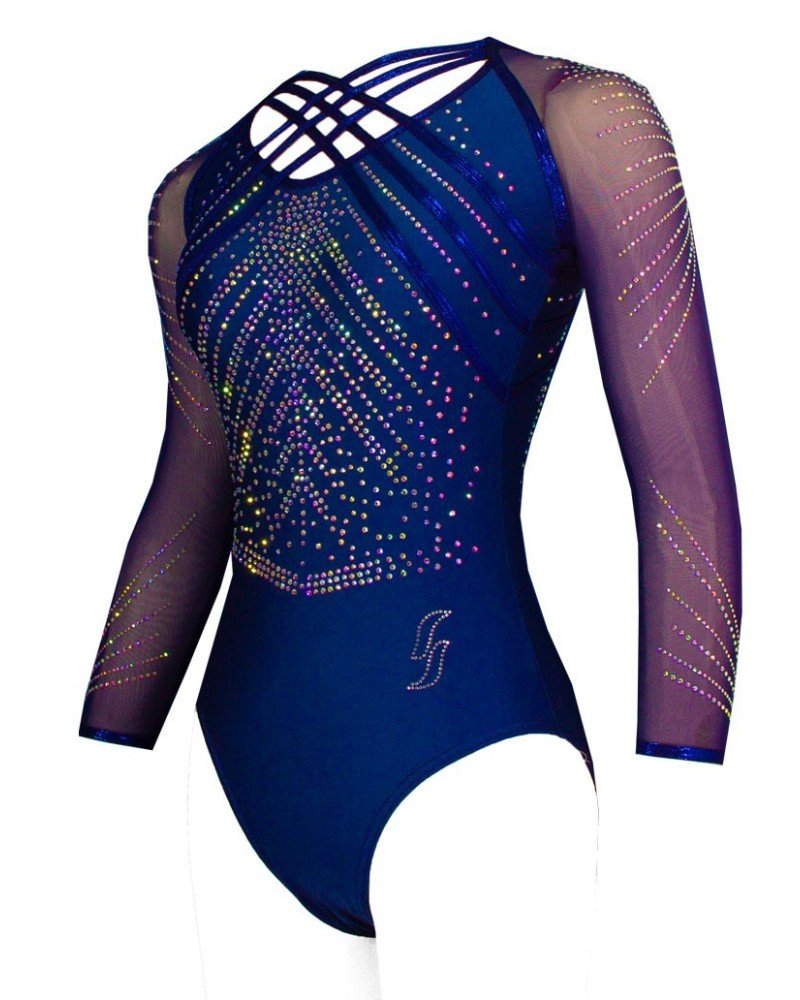
Gymnastics leotard sizing: how to choose the right size


For a gymnastics leotard in the right size to fit snugly while still moving with you, three steps matter: measure accurately, read the model’s size chart correctly and check the fit in motion. The following sections take individual customers and clubs through these steps to the right choice for training and competition.
How do you measure correctly for a gymnastics leotard?
With a leotard, centimetres count, not habits. Your everyday clothing size or your age says little about how a close-fitting leotard will sit. Only up-to-date body measurements, taken carefully and noted down, are reliable.
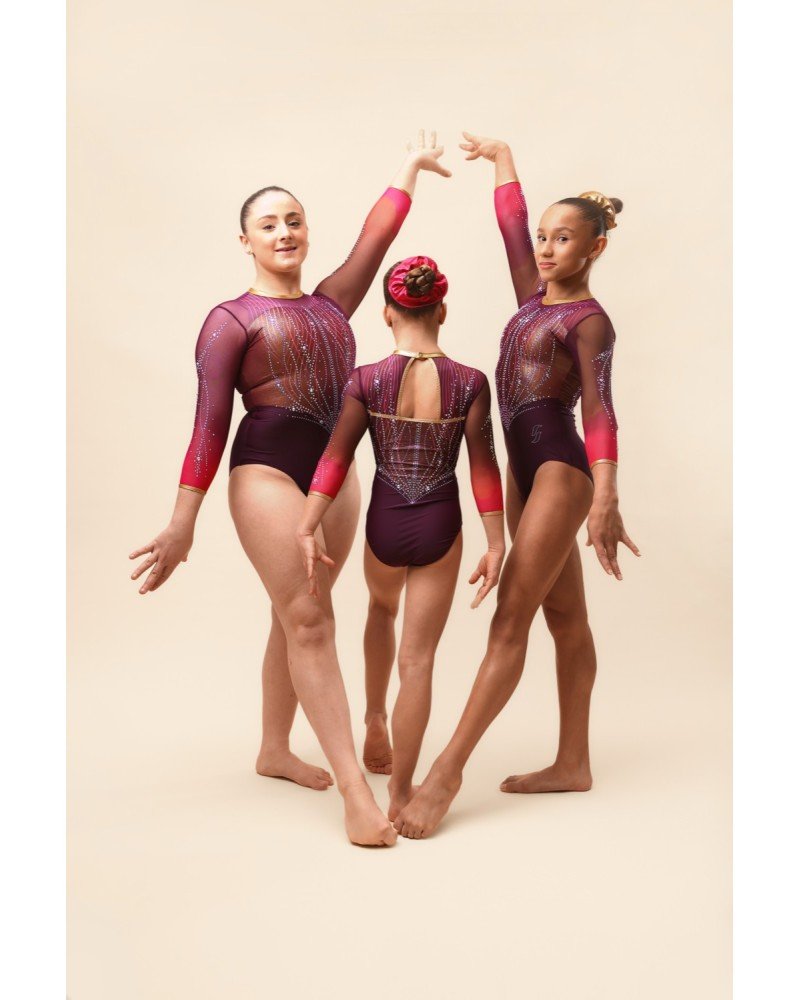
Preparing to measure
You need a flexible tape measure that lies against the body without digging in. It is best to measure over the underwear that will later be worn under the leotard. Thick clothing distorts every measurement.
Start with height: barefoot and standing straight, from the floor to the top of the head. If you stand against a wall, keep your chin parallel to the floor, otherwise the measurement changes.
Measuring chest, waist and hips
All three circumferences are measured horizontally, so the tape runs round the body at the same height all the way. In practice, each circumference has its own measuring point.
- Chest: under the armpits, at the fullest part of the chest.
- Waist: at the natural waist, without pulling the stomach in.
- Hips: over the fullest part of the bottom.
A simple movement shows where the natural waist is: when you bend to the side, a crease forms exactly there. That is the line where you place the tape measure.
Measuring the torso and other lengths
Some size charts also ask for a torso (girth) measurement. For this, the tape runs from a point on the shoulder at the front, through the crotch and up the back to the starting point. So you measure a closed loop, not just the distance to the crotch.
For models with sleeves or legs, arm length and inside leg length are added if the chart lists them. The inside leg runs from the crotch along the inner leg. Depending on the instructions, it ends at the ankle or at the sole of the foot.
According to one measuring guide, arm length is measured with the arm slightly bent, on the inside, from the armpit to the wrist. Ask a second person to help with these lengths so that you follow the measuring lines more carefully.
How do you find your size in the size chart?
With your measurements in centimetres noted down, it is time to compare. What matters is not the size on the label, but the measurements given in the chart for the chosen model.
Reading the details for the specific model
Your measurements for a gymnastics leotard always belong with the size chart of that specific model. Leotards from different manufacturers cannot be matched on the size label alone. Check beforehand whether a number refers to height, a clothing size, a manufacturer’s own code or a body measurement. Incidentally, an inch symbol in a size code does not mean you have to measure in inches.
Anyone reading a leotard size chart should also know what kind of measurements it gives. According to the Hohenstein textile testing institute, body measurements, pattern measurements and garment measurements are different things. The measurements of a leotard laid flat therefore do not match the body measurement column and do not, on their own, describe a fit. Startner provides the right chart for every model in its range ofgymnastics leotards for training and competition.
Choosing between two sizes
If your chest, waist, hip and torso measurements point to different sizes, the chart is only a first selection. Measure the disputed value again and, if possible, try on both neighbouring sizes of the same model. The advice in some charts to size up when in doubt does not apply to every leotard. If only the torso measurement falls outside the range, a model with a different cut may suit better than a different size.
Assessing children’s sizes during growth
Startner recommends choosing children’s sizes by body measurements rather than by age alone. Children’s sizes range from 4 to 14 years. Women’s sizes cover 36 to 46.
Sizes given by height do not decide the fit on their own either. The body measurements in each model’s chart remain decisive. For this, Startner offers a size calculator on every product page.
Going a size up for a growing child only makes sense if the neckline, straps and leg openings stay securely in place during movement. A size chosen only to last longer will wrinkle and may slip during the routine.
Recommended products
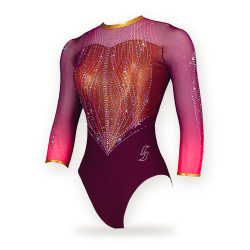
How can you tell a leotard fits well?
The chart gives you a size; the fitting confirms it. A well-fitting leotard sits close to the body without constricting and without limiting comfort or freedom of movement. Check it standing first, then in motion.
Checking the fit standing up
Stand up straight and check the areas where a poor cut shows first:
- Chest: the fabric lies smooth and opaque, without pulling or gaping.
- Stomach: close-fitting, but without pressure or constriction.
- Crotch: neither under tension nor too loose.
If it pulls at the crotch and at the shoulders at the same time, the torso is often too short, even if chest, waist and hips fit. A leotard like this can dig in and pull on the straps.
Testing the fit in motion
For the fitting, wear the intended underwear and, if relevant, the shorts you plan to use. The test follows this order:
- Standing upright: the starting position for comparison.
- Arms above the head: then bend the torso forwards and backwards.
- Deep squat and lunge: further sport-specific movements only in safe conditions.
Afterwards, the neckline, straps and leg openings should sit correctly again without being pulled back into place. Pulling at the neck, shoulders or crotch and painfully stretched seams count against the size. Check opacity with the fabric stretched, as it cannot be judged reliably while standing.
Checking sleeveless models with extra care
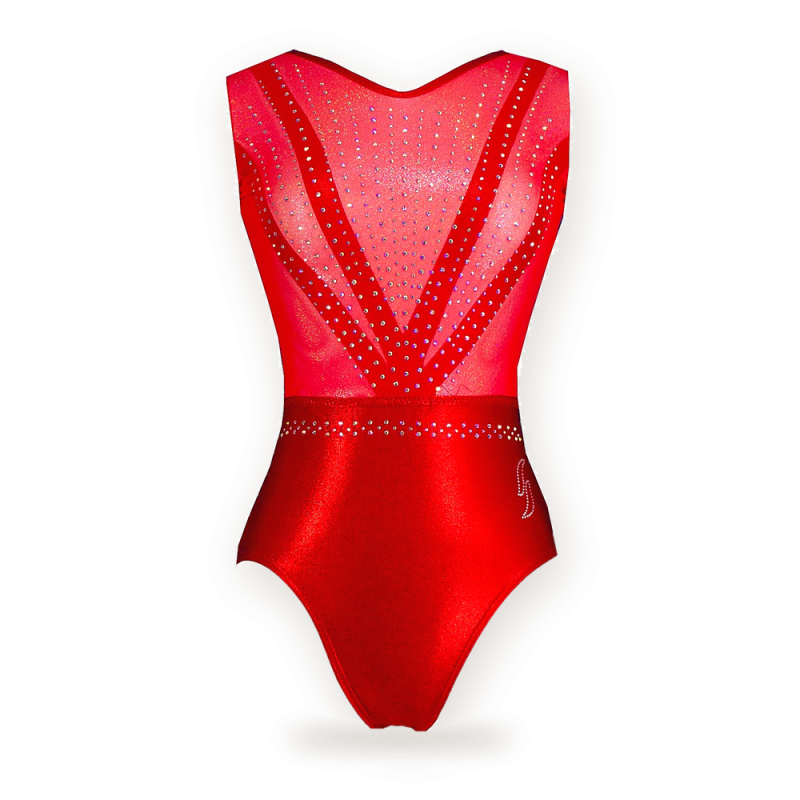
Sleeveless leotards leave the shoulders and arms free, so the straps provide the support. They stay in place even when the arms are raised, without digging in or slipping down. During jumps and turns, the leg openings must not ride up either.
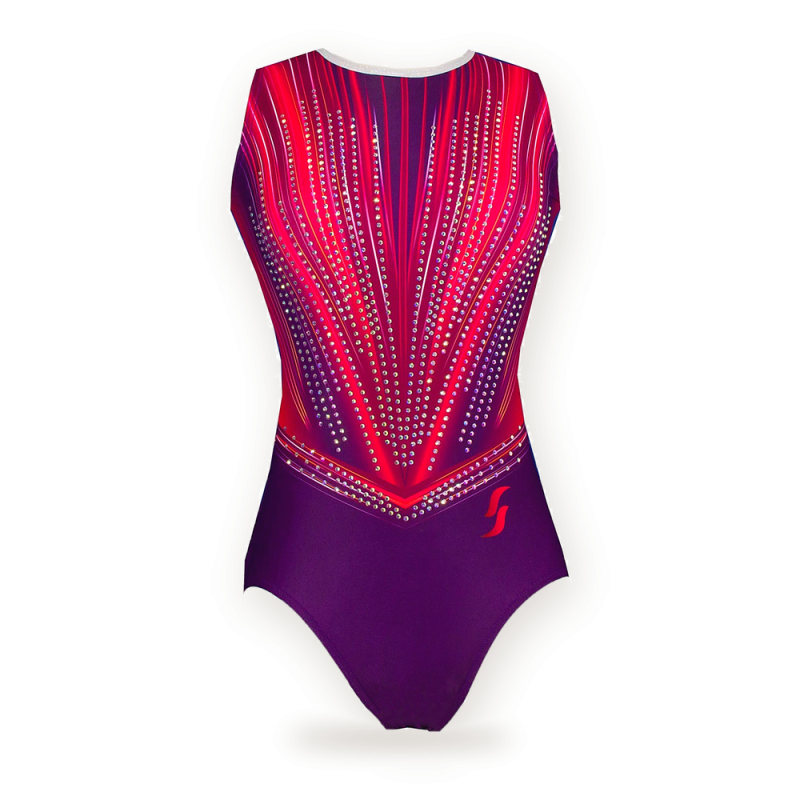
Heavy wrinkles on the back or bottom and a gaping neckline point to too much room. Chafing or pinching at the armpits also counts against the size. This check applies to plain models just as much as tosleeveless leotards with rhinestones.
Tip
Use the chart and the fitting together
Compare your measurements in centimetres with the chart for the specific model; trying it on standing and in motion confirms the size: close-fitting, without constricting.
Which size suits training and competition?
The measured size stays the same, but use, fabric and sleeve style change what the fit needs to deliver. For competition, the clothing rules of each discipline also come into play.
Assessing Lycra training leotards
For regular training, Startner recommends plain leotards with good support. For first club sessions, the brand suggests matt Lycra, which allows plenty of freedom of movement and stands up to frequent washing. On a training model, the difference shows in three points:
- Stretchy, hard-wearing fabric: copes with daily use.
- Strong seams: do not give way when stretched.
- Recovery: the fabric returns to its shape after movement.
A fibre name alone guarantees neither the right size nor opacity. Check the cut, materials and finish of the sportswear on the actual leotard, for example in ourselection of hard-wearing training leotards.
Taking long sleeves and other sleeve styles into account
A long-sleeved leotard covers more of the arms and keeps you warmer in cool gyms. Even so, the extra fabric must not restrict freedom of movement. Sleeveless gymwear, on the other hand, lets more air circulate.
Short-sleeved and three-quarter-sleeved models are a middle way between sleeveless leotards and long-sleeved gymwear. They are the better choice if you want to combine warmth and breathability. With a short-sleeved model, pay particular attention to the fit at the armpits and when raising the arms.
Checking competition rules when choosing
Rhythmic gymnastics has its own rules. The 2025–2028 rhythmic gymnastics Code of Points allows narrow straps and requires close-fitting pieces and a leotard that is opaque from the chest to the crotch. Shorts are not permitted there.
Buy gymnastics leotards direct from the manufacturer
Since 1968, we have been making gymwear in Marseille for training and competition, for clubs and individuals. Discover it now.
Frequently asked questions
Startner recommends comparing your body measurements again with the size chart on the product page. Then choose a leotard that fits closely on the upper body without pressing. The straps should stay in place without digging in, even during intense movement.
A documented sample size, along with recorded measuring methods and fit observations, helps check everyone using the same procedure.
No, not every size chart asks for a torso measurement; some go by chest, waist, hips and height. For many one-piece leotards, however, the torso measurement is an important criterion: chest, waist and hips can fit while the leotard pulls at the crotch or the shoulders.
Share this article: