How to choose the right gymnastics leotard size


A technical lycra leotard is chosen from four body measurements: height, chest, waist and hips. Getting the size right depends on taking these measurements correctly, comparing them with the model's size chart and then confirming at the fitting.
Measuring chest, waist and hips
A few centimetres out can be enough to move you to another row of a chart. So everything starts with accurate measurements, taken in the right conditions.
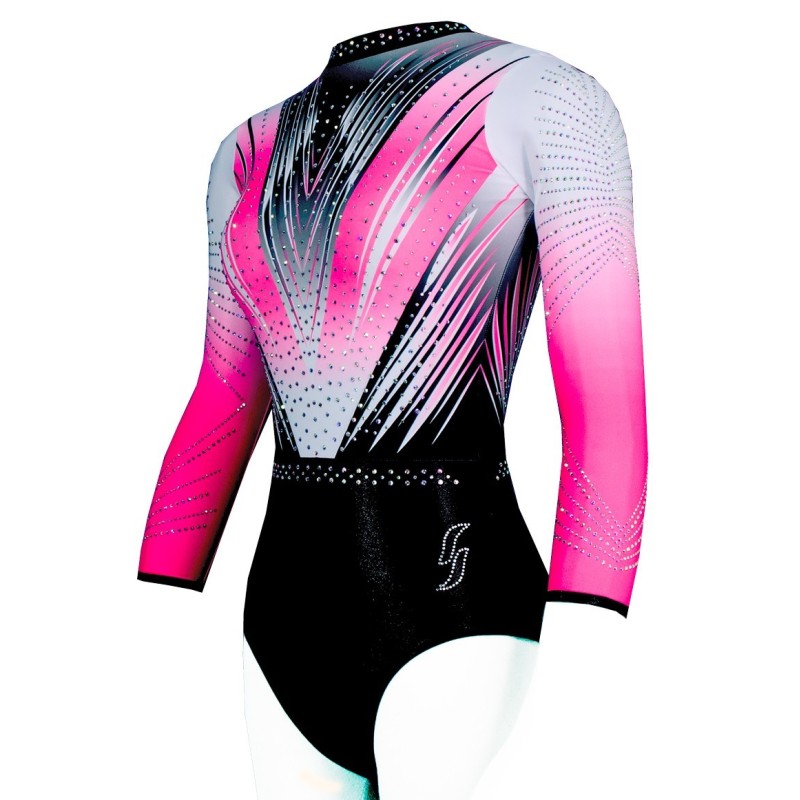
Getting ready to measure
I always work with a dressmaker's tape measure, soft and flat, never with a rigid ruler. The tape sits against the body and follows its shape, neither tight nor loose.
What you wear matters as much as the tool. A jumper, sweatshirt or jacket adds several centimetres to the real measurement and leads you to order a size too big.
- Clothing : underwear or thin close-fitting clothes, never over a thick garment.
- Posture : standing straight and relaxed, arms by your sides.
- Breathing : normal, without pulling in or pushing out the stomach.
In practice, a second person, a parent or the coach, keeps the tape straight across the back and reads the number.
Taking the three measurements
Chest is measured horizontally at the fullest part of the chest. The tape goes under the armpits, lies flat across the shoulder blades and does not compress the chest. Waist is measured at the narrowest part of the torso, usually just above the navel, halfway between the lowest rib you can feel and the iliac crest, the bone at the top of the hip.
Hips are measured with feet together, at the widest part of the pelvis, over the bottom, usually around 20 cm below the waist. Bring the tape round the back to the starting point, keeping it at the same height: if it rides up at the back, the number is wrong.
Adding height and useful lengths
Height is measured barefoot, standing against a wall or door, from the floor to the top of the head, not counting hair. It is the first reference we look at for a child.
When the model's guide asks for it, also note the torso length: from the neckline, between the collarbones, down to the navel.
Some models also ask for the girth (torso) measurement, which starts at the middle of the shoulder, passes through the crotch and comes back up to the shoulder. Depending on the case, back, sleeve or leg length may be added, taken at the points shown in the guide.
Reading the leotard size chart
Accurate measurements are worthless if compared with the wrong chart. A size chart is read row by row, using body measurements, never the size on the label of your jeans.
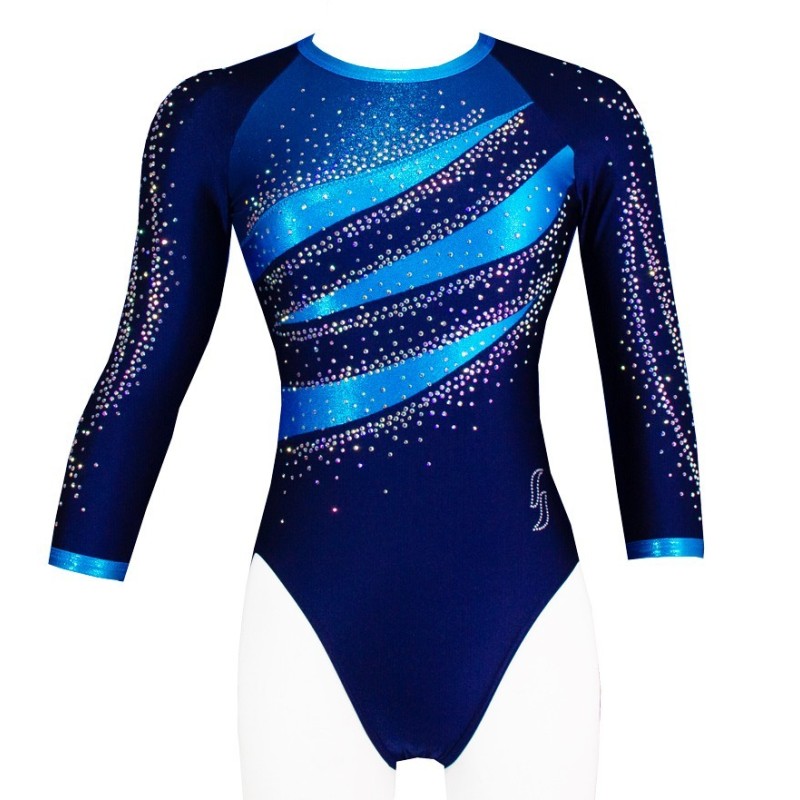
Comparing each measurement
Startner recommends entering height, chest, waist and hips against the chart for the model in question. When the main measurements clearly fall on the same row of the leotard size guide, that row gives the size to order.
- Chest : horizontal circumference at the fullest point.
- Bust : a commercial term that refers to a different area depending on the manufacturer.
- Guide definitions : read them before comparing, as they set where each measurement is taken.
In practice, reread the definition of each measurement before entering your figures. That is what ensures you order the right size, especially when a guide talks about the bust where you measured the chest.
Don't go by age
Two ten-year-olds can have very different heights and proportions. For a child, actual height comes before the age printed on the label.
A high-street clothing size such as 38-40 does not convert into a leotard size. Manufacturers work from body measurements, and that is where the right leotard size is decided, not in wardrobe habits.
Understanding letters and equivalents
The letters S, M and L have no universal equivalent: each brand gives them its own chest, waist and hip ranges. So your measurements should only be compared with the manufacturer's chart, for example the one for the gymnastics leotards made in France you have in mind.
The NF EN 13402-3 standard, in its September 2017 version, governs size labelling based on body measurements and their ranges. It does not replace each brand's own chart. As a guide, here is a children's and adult chart, followed by the heights from a girls' size-by-age table.
| Size | Chest | Waist | Height (girls, by age) |
| 6 years | — | — | 111 to 116 cm |
| 8 years | 57 to 62 cm | 42 to 46 cm | 123 to 128 cm |
| 10 years | 61 to 65 cm | 46 to 50 cm | 134 to 140 cm |
| 12 years | 64 to 68 cm | 50 to 54 cm | 141 to 152 cm |
| 14 years | 68 to 73 cm | 54 to 58 cm | 153 to 158 cm |
| Adult S | 72 to 78 cm | 58 to 62 cm | — |
| Adult M | 78 to 84 cm | 62 to 66 cm | — |
| Adult L | 82 to 88 cm | 64 to 70 cm | — |
Recommended products
Dealing with doubt and different body shapes
A body rarely falls exactly on one row. Hesitating between two sizes, or a torso that does not match height, is best settled with a simple decision rule rather than guesswork.
Choosing between two sizes
Our position: between two sizes, comfort and support come before the feeling of compression, and the cut must stay close to the body. For a growing child's leotard, the larger size works as long as it stays fitted. Deliberately going far too big creates folds and loses support.
A concrete example: if the measurements are above a size 8-10 years but still below a size 11-12 years, I recommend size 11-12 years.
Adapting the choice to the figure
For a long torso or rapid growth, check the torso length first. For a tall, slim gymnast, length comes first; then check the neckline and armholes to avoid too much volume.
When height matches a children's size but chest or hips match a larger size, choose according to the main measurements. A girth or back length outside the chart calls for made-to-measure, which guarantees a fitted cut with no compromise.
Taking use into account
As a competition approaches, I prefer a fitted cut that hugs the body; for recreational gym over the year, a reasonable margin is enough. In rhythmic gymnastics, the fabric must stay in place during extreme ranges of movement, and FIG or federation rules vary from one discipline to another. Startner offers customisable leotards for clubs, in women's and men's artistic and rhythmic gymnastics, for training and competition alike.
Trying on your gymnastics outfit
The chart gives a size; the fitting confirms it. A few movements are enough to tell whether the outfit follows the gymnast's body or gets in her way.
Spotting a correct fit
A well-fitting leotard hugs the body without bagginess or excess fabric, while allowing complete freedom of movement.
In practice, the test comes down to three movements, done in the leotard, not standing still in front of a mirror.
- Arms raised : no pulling at the shoulders and no difficulty breathing.
- Jump and stretch : the fabric follows without riding up.
- Armholes and sleeves : full range of movement is free, and long sleeves reach the wrists.
If all three movements pass, the size is right. All our gymnastics leotard collections can be checked with this same test.
Spotting the wrong fit
Too big, the leotard forms folds, slips or moves during elements and gives poor support. Too small, it squeezes the body, pulls at the shoulders or crotch and restricts movement from the first exercises.
In competition, an outfit that is too loose hides movements and distracts the judges. A well-fitting outfit lets the gymnast stay focused on her performance.
Keeping up with a changing body
A leotard that has become tight around the chest or shoulder blades should be replaced. In adolescence the chest develops, and outfits need replacing more often.
In practice, retake measurements before every purchase whenever the last ones are several months old, especially during growth spurts. That is what lets you choose the right size for the coming season.
Frequently asked questions
Yes, but only a little: stretchy technical lycra offers slight tolerance on measurements. How supportive it feels also depends on the fabric, not just the size.
Three things: torso length, ease across the shoulders and support without excessive compression.
A racer-back leotard, which gives the bust more support.
Share this article: