How to wash a rhinestone competition gymnastics leotard


A competition leotard decorated with rhinestones copes badly with two things: heat and friction. Knowing how to wash a competition leotard without losing its stones or the stretch of the fabric therefore starts with avoiding both, from the changing room to the garment bag.
What should you check before washing a rhinestone leotard?
The first thing that damages a competition outfit is the time it spends rolled up and damp at the bottom of a bag. Before any care, the leotard needs air, a quick inspection and a careful read of its care instructions.
After the competition
Take the leotard out of the bag as soon as you get back from the floor. Left damp for a long time in a closed bag, it can be damaged: sweat attacks the fabric, the glue and the decorations.
- Take the outfit out quickly : this is the first step, even before rinsing.
- Rinse in cold water : if washing in water is allowed, a quick rinse removes some of the sweat and salts.
- Air it separately : if washing has to wait, let the outfit dry on its own, out of the sun, and never put it away damp.
This rinse does not remove everything. Greasy residue, deodorant and dirt remain on the fabric and need a proper wash afterwards.
Inspect the fabric and the decorations
Before washing, check the underarms and crotch, where sweat builds up. Then look at the seams, mesh, appliqués and every rhinestone area. A stone that moves is about to come off: do not pull on it to test it, and do not rub the area.
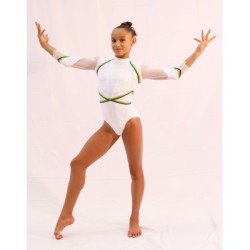
The more fabrics an outfit combines, the more the inspection matters. The emerald green rhinestone leotard Anastasia-03 combines rhinestones and three-quarter sleeves in sheer mesh: two delicate surfaces to be handled with the same care.
Choose the method the care instructions allow
Read the composition, symbols and instructions for the model before choosing. Washing instructions vary according to the fabric, the rhinestones, how they are attached and the finishes. Some manufacturers allow hand washing, others a machine cycle, and sometimes advise against the other method.
If the label is illegible or says nothing about the decorations, ask the manufacturer for instructions rather than guessing. If washing in water is prohibited, an improvised hand wash is too. If only the machine is ruled out, spot cleaning remains possible when the manufacturer accepts it: a soft cloth, barely damp, a tiny amount of mild soap, without soaking the decorations.
Dry cleaning does not solve the problem. According to the CTTN, a French institute specialising in textile care, how well rhinestones hold depends on their glue and attachment: loose stones and glue marks have been observed after this treatment.
How do you hand wash a rhinestone leotard?
Hand wash only if the model allows it. It is not a fallback option. In that case, each step aims to remove sweat without putting anything under tension or friction.
Prepare the water and the detergent
Fill a basin with cold water, or lukewarm water at most, unless the label is stricter. A mild liquid detergent for delicates is suitable if the instructions allow it. Dose it according to its instructions and the volume of water: too much detergent leaves residue that is hard to rinse out. Bleach, whiteners and harsh stain removers are ruled out. Fabric softener should not be automatic: some care instructions prohibit it.
Wash without rubbing the decorations
Turn the leotard inside out before immersing it: the rhinestones, sequins and prints are then less exposed to the water and your hands. Do not leave it to soak for long. Prolonged soaking can weaken the rhinestone glue, and some models prohibit soaking altogether.
Then gently wash the underarms and crotch, without pulling on threads or rubbing the lycra, mesh or decorations. This is the case with the white Reinette-02 leotard with colourful patterns, where patterns and rhinestones share the same areas.
Rinse, then remove excess water
Rinse in clean water until no trace of detergent remains, without rubbing the decorated areas or stretching the leotard. Then press it gently, or roll it in a clean towel to absorb the water. Never wring it.
If a rhinestone needs regluing, do it on a clean, dry area, with a small amount of glue designed for textiles and rhinestones. Wait until it is completely dry before wearing or washing the leotard again.
Recommended products
How do you machine wash a rhinestone leotard?
Whether you can machine wash a rhinestone leotard depends on its care instructions, not on the machine setting. A manufacturer may even allow the machine and advise against hand washing. In that case, follow the machine instructions.
Use the permitted programme
A delicate cycle alone does not protect rhinestones, prints, metallic fabrics or glued elements. Use it only if the model's label allows machine washing. Then set the machine according to the model:
- Cold delicate cycle : the setting given in some care instructions, which sometimes also rule out hand washing.
- Short cycle at 20 °C : a ceiling set for some models.
- Short cycle at 30 °C maximum : the upper limit of the instructions we have seen.
- Stricter instruction : if the label gives one, it takes priority over all the guidelines above.
For its gymnastics leotards, Startner recommends a cold delicate wash. This is the setting it uses to preserve the quality of the leotard.
Limit friction in the drum
Where the instructions allow, put the leotard inside out in a mesh laundry bag. The bag limits snags, but the stones still go through the rotation. Wash it on its own if the label requires, with no towels, zips or rough garments.
The spin should stay gentle. If spinning is prohibited, turn it off. Otherwise, keep to the permitted setting and nothing more.
Take delicate fabrics into account
Shiny or metallic effects and prints wear with friction and repeated washing, even at low temperatures. Sweat and deodorant can sometimes accelerate this wear on metallic finishes. One more reason not to put off washing.
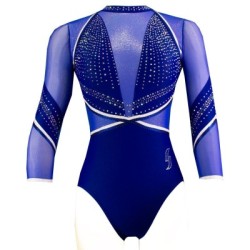
The Mina01 leotard in sublimated lycra has more than 100 rhinestones. With that kind of design, read its own instructions before putting it in the machine.
How do you dry and store a rhinestone leotard?
Much of an outfit's lifespan is decided after washing. Drying, ironing and storage expose rhinestones and fabric to heat and pressure, their two enemies.
Dry in the open air
The leotard dries in the open air, away from any heat source. Startner recommends this method to preserve stretch and decorations.
- Direct sunlight : it dulls or fades the fabric.
- Radiators and heat : never put the leotard on or near them.
- Tumble dryer : its heat and friction damage the fabric and weaken the decorations.
The drying position depends on the model. Some instructions call for drying flat on a towel or clean surface, others on a hanger.
On a hanger, the weight of the water or the decorations pulls on the leotard and can cause it to lose its shape. The more heavily decorated the model, the more this tension matters.
Preserve the look of the fabrics
Do not iron a rhinestone leotard directly. Heat can damage the fabric, the glue or the decorations, and hot steam can also weaken how they are attached.
Technical lycra is soft and very stretchy. Even so, unsuitable washing or repeated excessive heat gradually slackens and distorts it.
Velvet is most vulnerable to friction, crushing and prolonged pressure, which mark its surface.
Store without crushing the rhinestones
Wait until the leotard is completely dry before putting it away. Storing it damp encourages odours, mould and fabric damage.
During storage and transport, avoid any pressure on the rhinestones. An individual garment bag also protects the leotard from shoes, accessories and metal objects.
Frequently asked questions
No set frequency applies to every leotard. It depends on sweat, dirt, the number of sessions and the manufacturer's instructions.
Startner recommends a cold wash on a delicate cycle. Dry in the open air, away from direct sunlight and radiators, and never in a tumble dryer.
No, you need a glue designed for textiles and rhinestones. Ordinary glue can leave marks, damage the fabric or reduce its stretch.
Share this article: