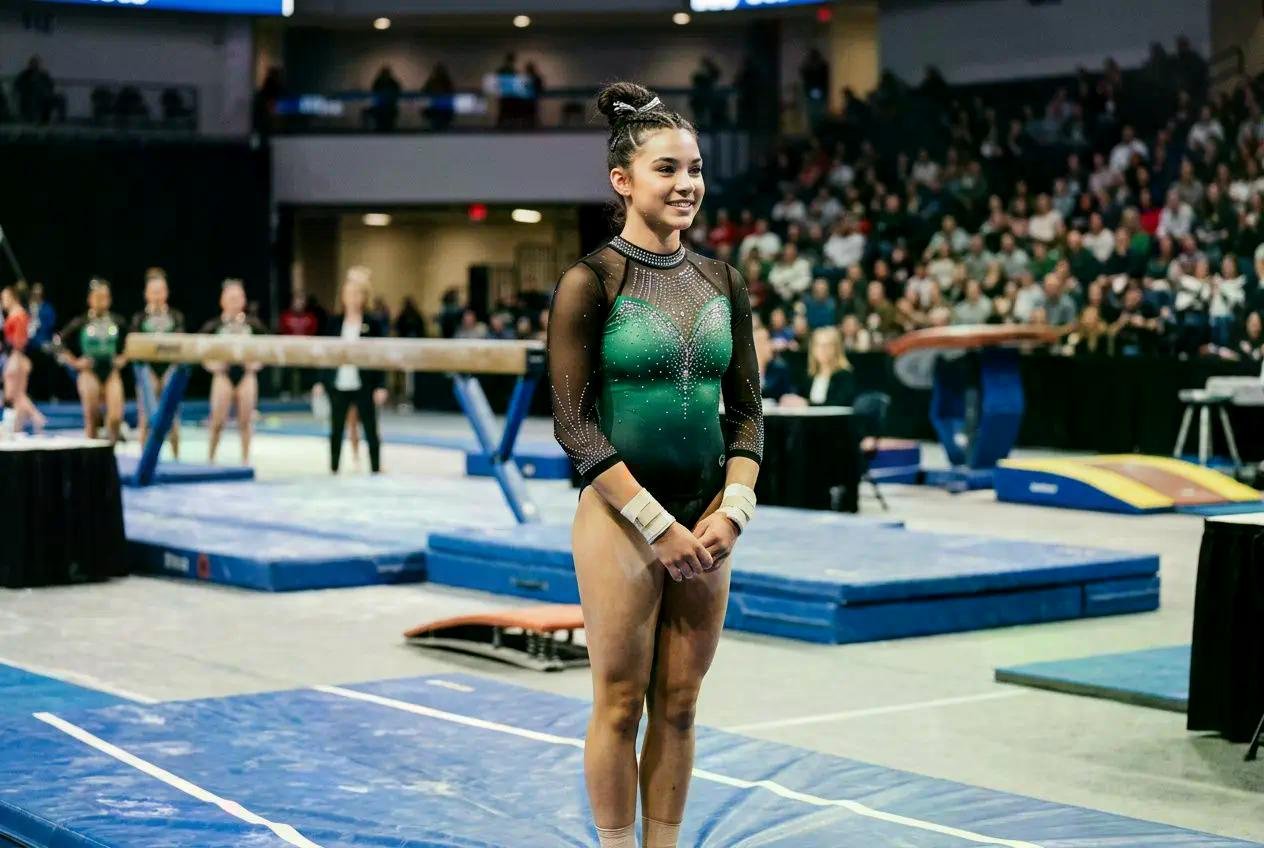
How to choose the right gymnastics leotard: a complete guide


Choosing a gymnastics leotard
A competition leotard in premium lycra at 160 g/m² and a training model in matt lycra at 210 g/m² are not built for the same demands. Before ordering, ask two questions: what will it be used for, and at what level? The answer comes down to fabric weight, cut and seam strength. To explore each criterion in more depth, see this guide to gymnastics leotards, which covers the full range available.
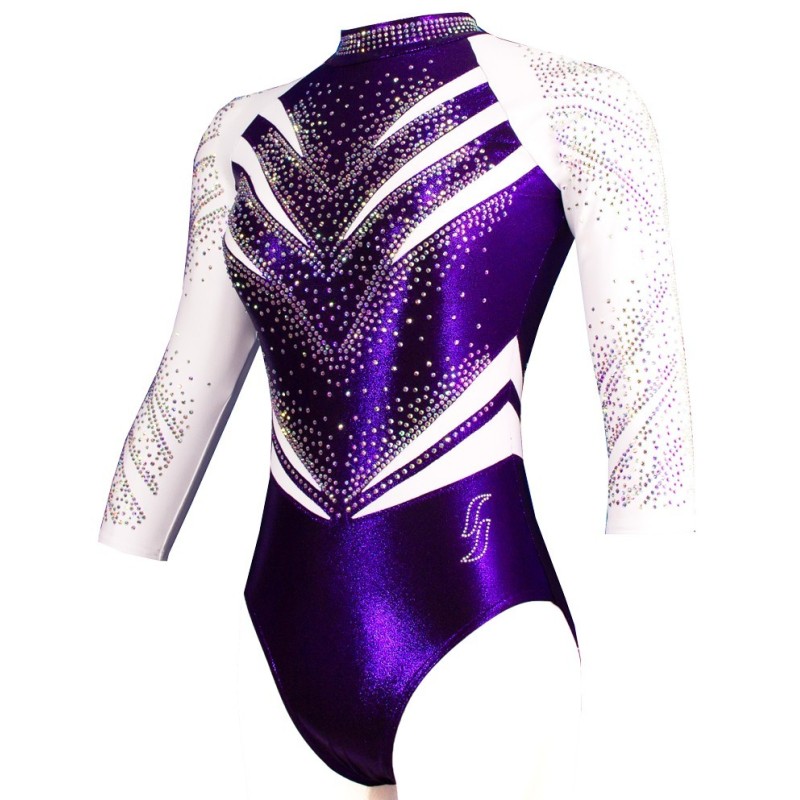
Training or competition
For training, choose a matt lycra leotard made of around 80% polyamide and 20% elastane, with a fabric weight between 190 and 220 g/m². It offers abrasion resistance, opacity and freedom of movement for a whole season. These are the criteria we prioritise for clubs looking for a versatile, durable training model.
- Regular training : matt or standard lycra, heavier fabric (190–220 g/m²), flat seams to limit chafing during repeated sessions.
- First competition : shiny or printed lycra, mid-weight fabric, fitted cut with an inner lining for opacity under the spotlights.
- Official competition : premium lycra or velvet, lighter fabric (160–180 g/m²), rhinestones and inserts according to federation and category rules.
How long a gymnastics leotard lasts depends as much on its construction as on the fabric. A flatlock seam avoids the friction points that start tears within the first hours of intensive wear. For clubs kitting out several gymnasts at once, our guide to customisable leotards sets out the personalisation options available by level and discipline.
Fabrics and freedom of movement
Fabric weight determines opacity, durability and how the leotard feels on the skin. For a competition gymnastics leotard, a lighter weight of around 160 to 180 g/m² limits overheating under arena lighting. Premium lycra, with its four-way stretch and subtle pearly sheen, shows off every position in front of the judges far better than standard lycra. It is the fabric we recommend from regional competitions upwards.
Velvet brings a depth of colour and a way of catching the light that lycra cannot match, although it is sometimes slightly less supple. Keep it for outfits where looks matter as much as mobility. Holographic or metallic lycra, for its part, requires flatlock seams without exception: any raised topstitching creates a friction point that starts a tear within the first hours of intensive wear.
| Fabric | Recommended weight | Main use | Key feature |
| Matt lycra (standard) | 190–220 g/m² | Training | Durable, opaque, easy care |
| Shiny lycra | 180–210 g/m² | First competitions | Sparkle under the lights, good suppleness |
| Premium lycra | 160–180 g/m² | Regional and national competitions | Four-way stretch, pearly sheen |
| Velvet | 190–220 g/m² | Artistic-led competition | Depth of colour, slightly less supple |
| Holographic lycra | 180–200 g/m² | Competitions and galas | Intense mirror effect, flatlock seams essential |
Details that matter in competition
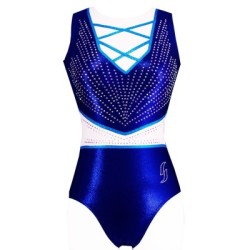
The International Gymnastics Federation rules prohibit see-through fabric on the torso and require the leg cut not to go beyond the hip crease. These two points shape the whole choice of model: a well-made inner lining guarantees full opacity in every position, even under bright lighting. Without a lining, lightweight shiny lycra can become see-through in the very first splits. For clubs looking for a specific model that already complies, choosing a leotard such as the choice of a gymnastics leotard Gwen Red illustrates what we mean by rule-compliant construction.
Heat-applied rhinestones allow dense, detailed patterns, but their hold weakens with friction and sweat if care is not rigorous from the very first weeks. Sewn-on rhinestones stand up better to repeated handling, and losing one crystal does not weaken the ones around it. In regular competition, how well stones are fixed matters as much as how they sparkle under the lights.
Customisation for clubs
A club ordering for twenty gymnasts has different needs from a gymnast choosing her own outfit. At Startner, customisation covers club colours, logos, specific patterns and rhinestones, with production overseen in our workshop in Marseille. This direct control over cut and fabrics is what keeps a team looking consistent throughout a competition season, with no variation in fabric weight or finish from one leotard to the next.
Recommended products
Frequently asked questions
Choosing the right leotard size depends on body measurements, not age: chest, waist, hips and torso length (from the middle of the shoulder to the crotch) are the four key measurements. A leotard that is too big creates folds that make positions harder for judges to read; one that is too tight constricts and limits range of movement. For a growing child caught between two sizes, the larger size is the right choice, provided the fabric does not wrinkle at the shoulders.
The cut affects comfort as much as how movements are shown off. For a gymnast with broad shoulders, choose short sleeves or wide straps; avoid a boat neck, which emphasises width. A fuller bust is better supported by a V-neck with a reinforced lining. A sleeveless leotard offers maximum freedom of movement and is particularly suited to dance and disciplines where ventilation matters. For a petite frame, a model with a cut-out back and high-cut legs visually lengthens the silhouette.
Hand washing in cold water is the safest method, especially for models with rhinestones or holographic fabric. In the machine, a delicate cycle at 30 °C maximum with a low spin (400 to 600 rpm), leotard turned inside out, protects decorations and shiny areas. Never use fabric softener: it clogs breathable fibres and destroys elastane. Dry flat in the open air, never in direct sunlight or a tumble dryer. Sweat left on the fibres degrades elasticity, so wash after every session, without exception.
Share this article: