What should a child wear for gymnastics? A guide by age


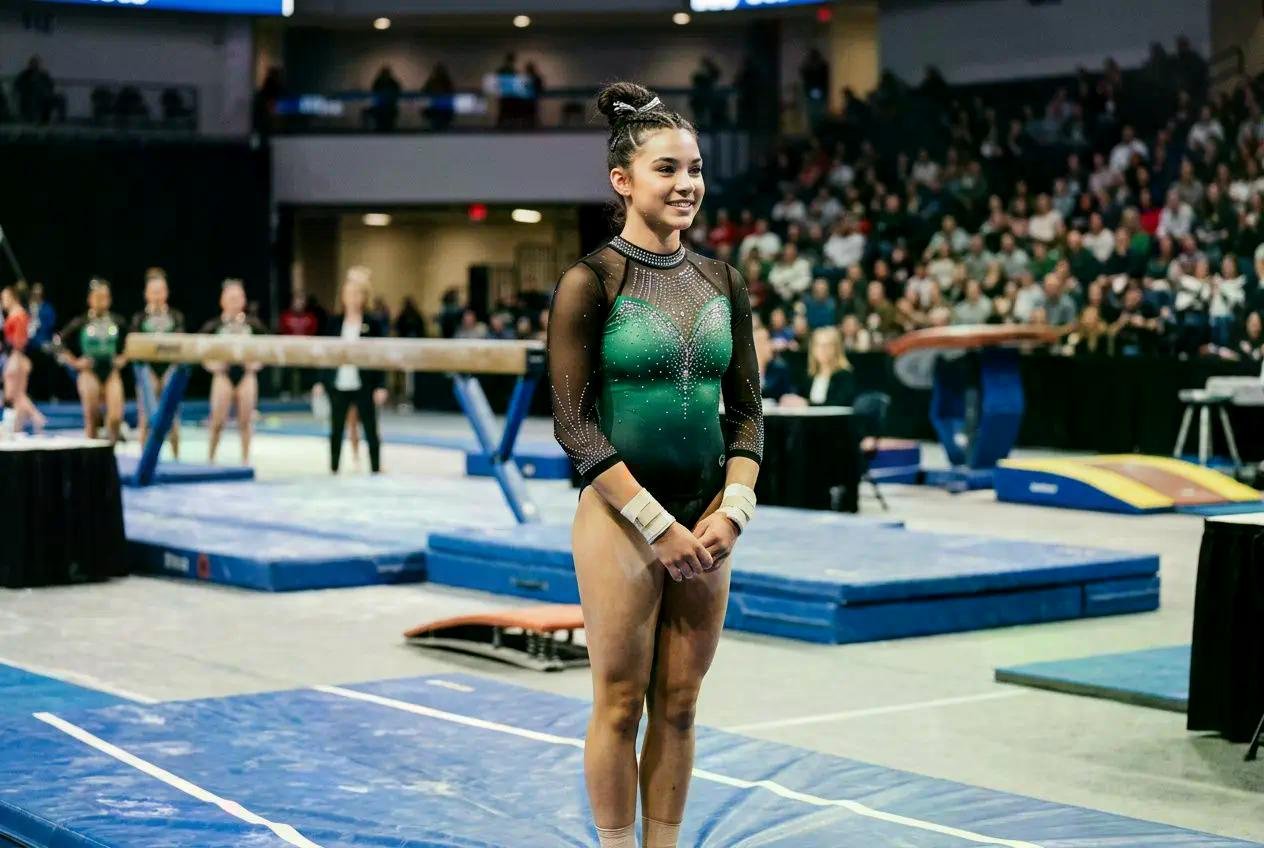
When dressing your child for gymnastics, the basic rule fits in one line: close-fitting, stretchy clothing with nothing that can catch. The rest depends on the club, the child's age and the discipline.
What should a child wear for gymnastics training?
There is no single outfit for every form of gymnastics. Rules vary from club to club and from discipline to discipline. So before buying anything, the first thing to check is what the club accepts.
Check the club's dress code
A club can refuse to let a child take part if their outfit does not meet the dress code. In practice, asking the coach before the first session avoids a pointless purchase and a missed first class.
For a recreational session, a fitted T-shirt or vest top with shorts is often enough, if the club accepts it. The model internal rules that the French Gymnastics Federation (FFGym) offers clubs ask for suitable, close-fitting clothing. They do not require a leotard at every training session: the choice between a leotard and a T-shirt is up to the club.
Choosing between shorts, leggings and a tracksuit
Fitted shorts in a light, stretchy fabric stay in place during jumps and rotations, which loose shorts do not. Some clubs accept leggings with a close-fitting top or a leotard: we want them opaque, stretchy and secure at the waist, like our gymnastics leggings with elastic waistband. A tracksuit is for arriving and warming up, but some clubs ban it during exercises. Avoid zips, buttons and dangling cords, which catch on equipment.
Finding a leotard in the right size
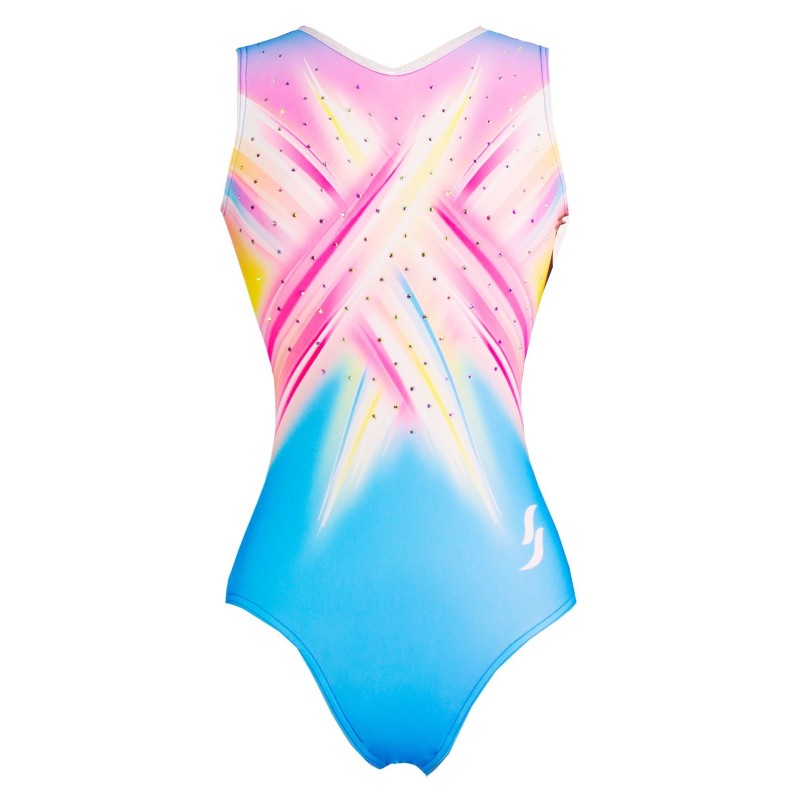
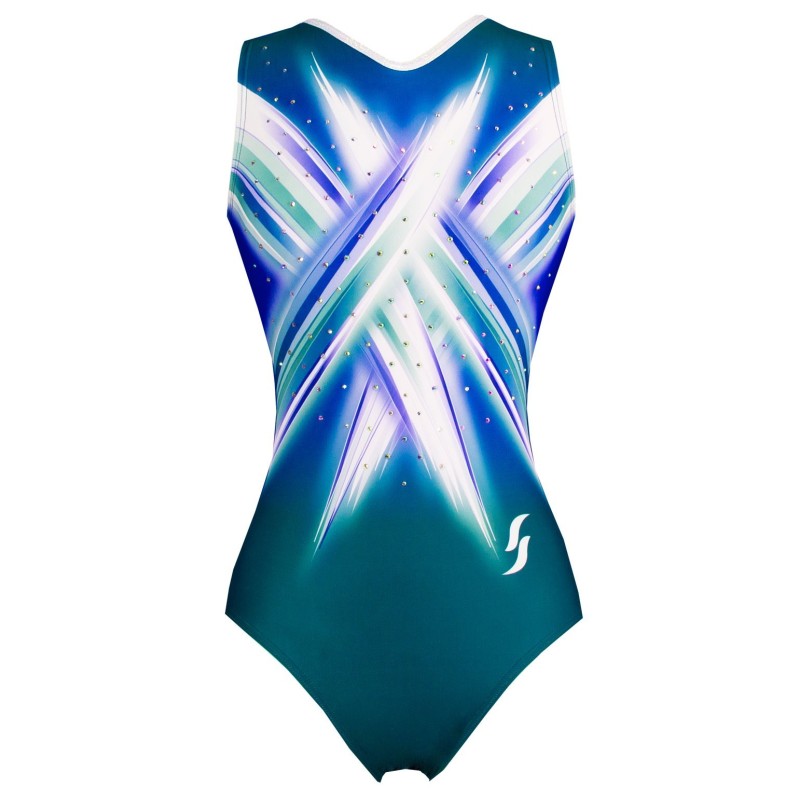
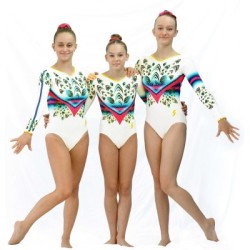
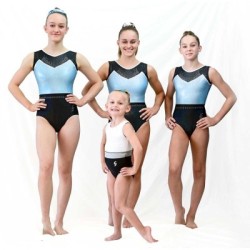
For training, Startner recommends a comfortable lycra leotard, like those in our range of lycra training leotards. Shiny, patterned or rhinestone models are often preferred for competition. Technical lycra provides stretch and support, in matt, shiny, holographic, metallic, printed or velvet finishes. For sizing, we measure height, then chest, waist and hips.
- Too big : the straps slip, the back gapes, the crotch hangs low.
- Too small : the straps pull, the shoulders feel restricted, the child struggles to raise their arms.
- Well fitted : the leotard follows every movement without constricting.
How to adapt the outfit to the child's age
Age guides the choice of first outfits, especially for toddlers, for whom comfort and safety come before anything else. Later on, the discipline takes over.
Dressing a child for Baby Gym
According to the FFGym, Baby Gym welcomes children from 15 months to 6 years. They are split into two age groups, and clothing follows the same logic.
- From 15 to 36 months : the child takes part with a trusted adult, in simple, soft clothing.
- From 3 to 6 years : the FFGym describes a play-based activity, and a soft outfit is enough if the club accepts it, with no competition wear.
- At any age in early childhood : clothing should be fairly close-fitting.
For the youngest, one club recommends shorts or leggings with a comfortable T-shirt or vest top. The reason is practical: overly loose clothing gets caught in the teaching equipment, foam blocks and small apparatus.
Taking older children's activities into account
According to the FFGym, trampoline can start from age 6, aerobics at 10 and TeamGym from 12. Each new discipline brings its own dress rules.
The starting age does not settle everything. The FFGym 2025-2026 aerobics rules, for example, provide competition categories from 7–9 years, before the usual starting age.
In practice, the discipline and the group's rules matter more than age alone. Two children of the same age may wear very different outfits depending on whether they do trampoline or rhythmic gymnastics.
Recommended products
What to wear for each discipline
Each discipline has its training outfit and its competition outfit. The gap between them is sometimes small, sometimes total.
Women's and men's artistic gymnastics
In artistic gymnastics, training is often done in simple clothing, while competition requires regulated attire. For girls and boys alike, the difference comes down to the apparatus rules.
- Women's training : some clubs accept a leotard or a close-fitting T-shirt with shorts or leggings.
- Women's competition : the leotard remains the standard outfit.
- Men's competition : a leotard with shorts or sokol (boys' long trousers), depending on the apparatus.
The FFGym 2026-2027 men's and women's artistic gymnastics technical rules allow shorts on all apparatus for boys aged 13 and under. A gymnast of that age may therefore wear shorts on every apparatus.
Rhythmic gymnastics
In rhythmic gymnastics, one club asks for shorts or leggings with a crop top or vest top for training. In competition, the FFGym provides for a leotard with or without a skirt, or a unitard, that is, a full-length body suit.
The adapted FIG Code for rhythmic gymnastics 2025-2028 requires a fitted, opaque leotard from the chest to the crotch. In this area, any see-through part must be lined.
Decorations must stay close to the fabric so as not to compromise safety. In practice, a flat rhinestone with no relief catches neither the apparatus nor the hand.
Trampoline and other disciplines
In trampoline, the FFGym says shorts and a T-shirt are most often worn in training. In competition, girls switch to a leotard and boys to a men's leotard. Acrobatic gymnastics follows a similar approach, and aerobics requires girls to wear a strapless leotard.
Since 20 January 2025, the FFGym has allowed fitted shorts over the leotard in women's competition, of 10 cm maximum from the crotch. They must be stretchy, opaque, plain or matching, never skin-coloured and never worn with a unitard, like our white gymnastics shorts. Within a team, the shorts worn must be identical.
| Discipline | Training | Girls' competition | Boys' competition |
| Trampoline | Shorts and T-shirt | Leotard | Men's leotard |
| Acrobatic gymnastics | T-shirt and shorts | Leotard with or without skirt | Short-sleeved body suit |
| Aerobics | Depends on the club | Strapless leotard and skin-coloured tights | Short unitard, or shorts with a leotard |
| TeamGym | Depends on the club | Leotard, unitard, short unitard, leotard with shorts or sokol, or close-fitting T-shirt with shorts, leggings or cycling shorts; no loose clothing, which hinders the judges' assessment | |
What accessories to prepare for the session?
The outfit is not everything. What the child wears on their feet, their hairstyle and what is in their bag also matter for a smooth session.
Choosing what the child wears on their feet
There is no common rule across gymnastics: each discipline has its own, and a rule does not carry over from one discipline to another.
- Rhythmic gymnastics : routines are performed barefoot or in gymnastics slippers.
- FSCF women's gymnastics : the rules approved on 13 September 2025 and amended on 4 December 2025 allow socks and/or slippers in competition.
- Aerobics : some competition categories require specific shoes.
For the hands, grips protect the palms and improve hold on the uneven bars in women's artistic gymnastics. They are not automatically part of a beginner's kit: the coach will say when they are needed.
Tying hair back and removing jewellery
Many clubs, like the FFGym model internal rules, ask for long hair to be tied back. A hair tie, headband or scrunchie keeps it out of the eyes. In competitive rhythmic gymnastics, hair must be neat, compact and secure, and one club specifically asks for a bun.
Jewellery is banned in many clubs because of the risk of catching on equipment. The FFGym 2026-2027 artistic gymnastics technical rules explicitly ban earrings and piercings in men's artistic gymnastics.
Packing water and the sports bag
The federation's Access Gym booklet for beginners recommends putting water in the child's bag. Some clubs also ask for a water bottle with their things.
To carry a leotard, shorts and accessories, a small sports bag of 20 to 40 litres is enough for a child who only takes the essentials.
Frequently asked questions
No: buying one size up to allow for growth compromises the leotard's fit. A model that is too big creates folds, the straps slip, the back gapes and the crotch hangs low. It is time to change size when the straps pull or the child struggles to raise their arms.
Startner recommends a cold wash on a delicate cycle. Dry in the open air, never in a tumble dryer.
Yes, competition rules may require a club outfit different from the training one, in particular identical for all members of a team. Startner states that all its leotard models can be customised for clubs, in their colours and with their identity.
Share this article: